
How to Start an Online Jewellery Business: Step-by-Step Guide (2026)

Launching a jewellery business in 2026 presents a strong opportunity for creative entrepreneurs to build a scalable and profitable brand. The global jewellery market continues to generate hundreds of billions annually, with demand spanning fine jewellery, fashion pieces, and bespoke handmade designs. With a clear strategy, distinct positioning, and a strong digital presence, it is possible to build a brand that reaches an international audience while retaining full control over its identity.
This guide outlines the essential steps required to establish an online jewellery business—from defining your niche through to scaling operations.
Step 1: Identify Your Jewellery Niche
Selecting a clear niche is fundamental. The jewellery industry is broad, and focusing your offering allows you to define your audience and positioning more effectively.
Common categories include:
Fine Jewellery
High-value pieces crafted from precious metals and gemstones. This segment targets customers seeking luxury or long-term investment items.
Fashion Jewellery
Affordable, trend-driven designs made from plated metals, synthetic stones, and mixed materials. This segment typically relies on fast-moving trends and strong social media visibility.
Handmade and Artisan Jewellery
Unique, handcrafted pieces often sold through independent platforms or curated marketplaces. This niche emphasises craftsmanship, storytelling, and individuality.
A well-defined niche informs pricing, branding, and marketing direction.
Step 2: Analyse Market Trends and Design Direction
Market research is essential for understanding demand and identifying opportunities.
Use tools such as Google Trends and Pinterest to track popular styles, materials, and seasonal patterns. Observing social media trends and following established designers can also provide insight into evolving consumer preferences.
In addition, attending trade fairs, artisan markets, and industry exhibitions can provide practical exposure to materials, techniques, and customer expectations.

Step 3: Develop a Clear Brand Identity
A strong brand identity differentiates your business in a competitive market.
Key elements include:
- Brand story: Your inspiration, mission, and values
- Brand voice: The tone and language used across all communications
- Visual identity: Logo, packaging, photography, and website design
Consistency across these elements helps establish credibility and encourages customer loyalty.
Step 4: Create a Structured Business Plan
A business plan provides clarity and direction for your operations.
Business Model Options
- Handcrafted production: Suitable for artisan or premium collections
- Outsourced manufacturing: Enables scalability and consistent production
- Print-on-demand: Reduces upfront costs and inventory risk
- Dropshipping: Allows entry into the market without holding stock
Financial Planning
Consider all startup costs, including:
- Materials and tools
- Studio or workspace
- Product photography
- Website development
- Marketing and advertising
- Legal and administrative fees
Pricing should reflect production costs, target margins, and brand positioning.
Step 5: Produce or Source Your Products
Your production approach depends on your business model.
Handmade Production
Requires a dedicated workspace and appropriate tools. Consistency and quality control are essential.
Outsourced Manufacturing
Involves working with local or international suppliers. It is important to manage quality assurance, production timelines, and minimum order quantities.
Print-on-Demand or Dropshipping
Suitable for testing designs with minimal risk. However, it is critical to ensure that product quality and delivery standards align with your brand expectations.
Step 6: Invest in High-Quality Product Photography
Professional photography plays a significant role in online sales performance.
Effective content includes:
- Studio images with clean, neutral backgrounds
- Lifestyle photography showing products in use
- Collection lookbooks
High-quality visuals improve perceived value and increase conversion rates.

Step 7: Build Your Ecommerce Store
Choosing the right platform is essential for operational efficiency and growth.
Popular solutions such as Shopify and other ecommerce builders provide flexible tools, themes, and integrations tailored for online retail. Your store should include:
- Product pages
- Collection pages
- A clear checkout process
- Integration with social commerce channels
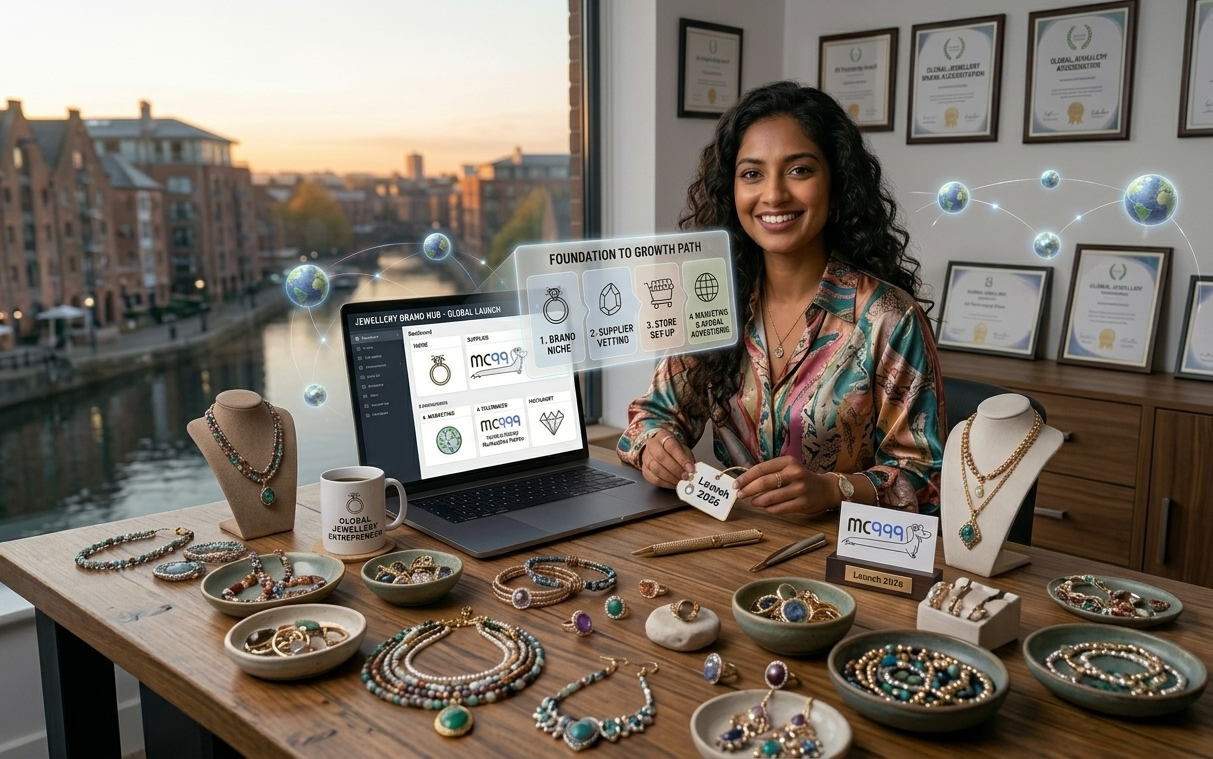
Leveraging MC999 Growing Marketplace
The MC999 platform enables jewellery entrepreneurs to expand beyond a standalone store while maintaining full control over their business operations. It supports integrations with platforms such as Shopify and BigCommerce, and offers:
- Customised delivery, returns, and warranty settings
- Direct customer communication
- Multi-channel selling via ShopHub, Flea Market, and Services modules
- Interactive location and service-based features
This approach allows brands to scale while retaining independence and ownership of customer relationships.
Step 8: Implement a Marketing Strategy
A strong marketing strategy is essential for driving traffic and generating sales.
Key channels include:
- Social media marketing: Instagram, TikTok, and Pinterest for visual promotion
- Influencer collaborations: Partnering with creators to expand reach
- Email marketing: Retaining customers and promoting repeat purchases
- Search engine optimisation (SEO): Improving visibility in organic search results
- Paid advertising: Targeted campaigns across digital platforms
Consistency and data-driven optimisation are critical for long-term success.
Step 9: Expand Sales Channels
Relying on a single channel limits growth potential. Diversification reduces risk and increases exposure.
Consider:
- Pop-up retail spaces
- Wholesale partnerships
- Craft fairs and exhibitions
- Online marketplaces such as Etsy and Amazon
A multi-channel approach enables broader market access while maintaining brand control.
Step 10: Scale Your Jewellery Business
Scaling requires a structured and strategic approach.
Focus areas include:
- Improving production efficiency
- Expanding product ranges and seasonal collections
- Strengthening brand engagement
- Introducing international shipping and multi-currency support
- Increasing marketing investment and customer retention efforts
Sustainable growth depends on repeat customers and consistent brand experience.
Final Thoughts
Building an online jewellery business in 2026 requires a combination of creativity, structured planning, and strategic platform selection. By focusing on a clearly defined niche, maintaining high product standards, investing in professional presentation, and leveraging multi-channel distribution—including platforms such as MC999—entrepreneurs can develop scalable and sustainable jewellery brands with global reach.
Frequently Asked Questions
Is a jewellery business profitable in 2026?
Yes. With a clear niche, strong branding, and effective online strategy, jewellery businesses can achieve healthy profit margins.
How much capital is required to start?
Startup costs vary significantly depending on production methods, ranging from a few thousand units of currency for small-scale operations to larger investments for manufacturing-based models.
Can I start from home?
Yes. Many jewellery businesses begin from home using small workspaces or co-working studios.
Which platform is best for selling jewellery online?
Platforms such as Shopify are widely used, while solutions like MC999 provide additional flexibility and multi-channel capabilities.
How should I price my products?
Pricing should account for materials, labour, production, marketing, and desired profit margins, while aligning with your chosen market segment.