
How to Start an Online Shop in the UK: A Step-by-Step Professional Guide

Launching an online shop in the UK has become increasingly accessible, with the UK e-commerce sector reaching an estimated £106 billion in annual sales. This growth creates significant opportunities for entrepreneurs, small business owners, and individuals seeking to build scalable online income streams.
This guide provides a structured overview of how to create, launch, and grow an online store in the UK, including platform selection, payment processing, marketing, and modern marketplace solutions such as Mc999.
Why Start an Online Store in the UK?
The UK has one of the most mature and competitive e-commerce markets globally. Consumers increasingly rely on digital platforms for convenience, product variety, and fast delivery.
An online store allows you to:
- Reach a national and international customer base
- Operate with lower overhead costs than physical retail
- Test products with minimal financial risk
- Build a scalable, brand-driven business
- Benefit from search engine visibility and organic traffic
Modern payment solutions such as PayPal, Apple Pay, WorldPay, and integrated processors within platforms like Shopify make it straightforward to accept secure payments and build customer trust.
Key Challenges of Selling Online
Despite its advantages, e-commerce presents several operational and technical challenges:
- Security & Compliance: Handling customer payment data requires adherence to PCI-DSS standards and strong cybersecurity practices
- Logistics: Managing stock, fulfilment, and international shipping can become complex
- Technical Performance: Slow websites or system downtime can lead to lost sales
- Platform Restrictions: Marketplaces often impose strict rules, fees, and limitations on listings and branding
- Customer Experience: Poor navigation, limited payment options, or complicated checkout processes reduce conversion rates
Careful planning and the use of reliable infrastructure are essential to mitigate these risks.
Essential Components of a Successful Online Store
A high-performing online shop must go beyond simply listing products. Core elements include:
- Professional product pages: High-quality images, detailed descriptions, and accurate specifications
- Clear navigation: Logical categories and filters for easy browsing
- Optimised checkout process: Minimal steps, mobile-friendly design, and multiple payment options
- Trust signals: Secure checkout, transparent return policies, and fraud protection
- Search engine optimisation (SEO): Keyword-optimised content to improve visibility on Google
- Customer feedback systems: Reviews and ratings to build credibility
Consistency in branding and user experience is critical for long-term success.
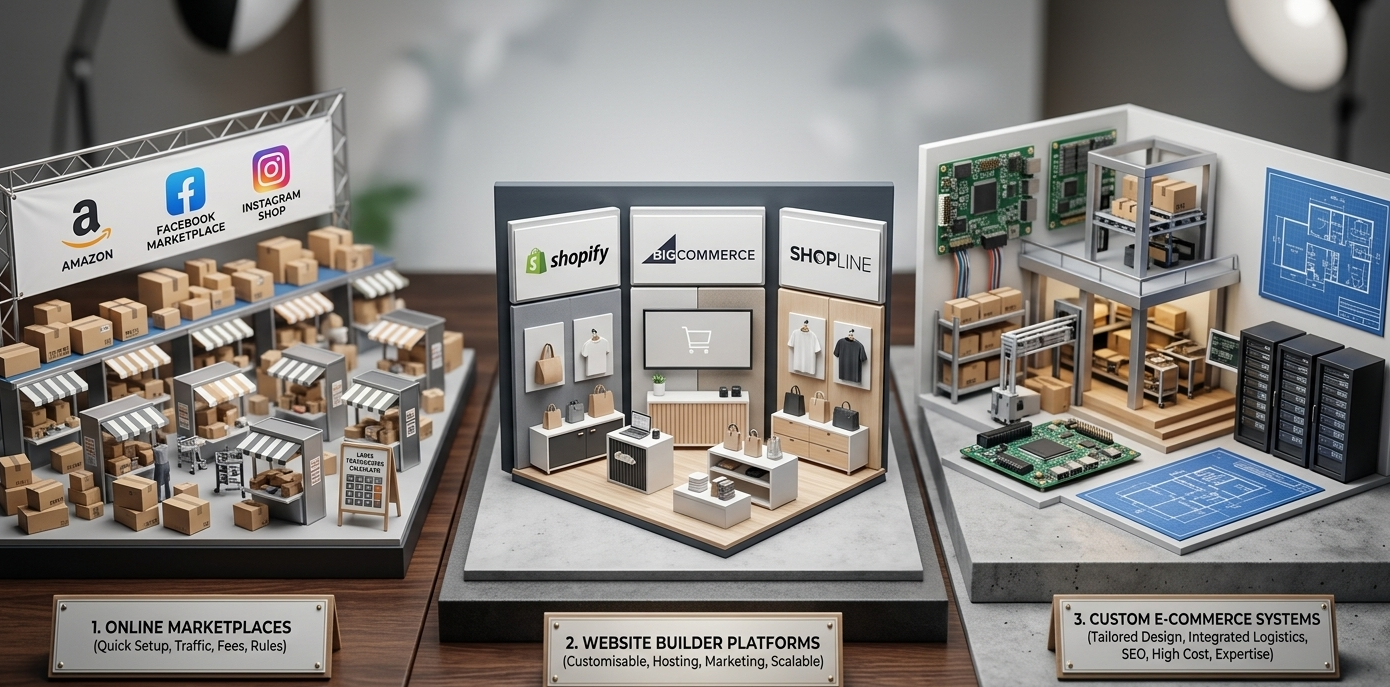
Choosing the Right E-commerce Model
There are three primary approaches to building an online shop in the UK:
1. Online Marketplaces
Platforms such as Amazon, Facebook Marketplace, and Instagram Shop provide immediate access to large audiences.
Advantages:
- Quick setup
- Built-in traffic
- Integrated payment systems
Disadvantages:
- Transaction fees
- Limited branding control
- Strict listing rules
2. Website Builder Platforms
Solutions such as Shopify, BigCommerce, and Shopline enable users to create professional online stores without advanced technical knowledge.
Advantages:
- Customisable storefronts
- Built-in hosting and security
- Integrated marketing tools
- Scalable infrastructure
This option is widely used by small to medium-sized businesses seeking balance between control and simplicity.
3. Custom E-commerce Systems
Custom-built solutions offer maximum flexibility and control.
Advantages:
- Fully tailored design and functionality
- Advanced inventory and logistics integration
- Enhanced SEO capabilities
Disadvantages:
- Higher initial cost
- Requires technical expertise
- Longer development time

Web Hosting and Performance
Reliable hosting is essential for maintaining fast load times, uptime, and security.
Key hosting requirements include:
- High uptime guarantees
- Fast page loading speeds
- Scalability for traffic growth
- Secure server infrastructure
- SSL certification for encrypted transactions
Many e-commerce platforms include hosting as part of their service, simplifying setup and maintenance.
Payment Processing and Security
Secure payment processing is fundamental to customer trust and legal compliance.
Common payment solutions include:
- PayPal
- Apple Pay
- WorldPay
- Integrated payment service providers (PSPs)
All online sellers handling card payments must comply with PCI-DSS (Payment Card Industry Data Security Standard) requirements. This includes:
- Secure data handling
- Fraud prevention measures
- Encrypted checkout systems
- Regular security monitoring
Marketing Your Online Store
A strong marketing strategy is essential for driving traffic and increasing conversions.
Search Engine Optimisation (SEO)
- Optimise product titles, descriptions, and metadata
- Publish blog content targeting UK-specific search queries
- Improve site structure and internal linking
Paid Advertising
- Google Ads for search-based traffic
- Social media advertising for targeted audiences
Social Media Marketing
- Platforms such as Facebook, Instagram, and TikTok
- Regular posting, promotions, and customer engagement
Analytics and Optimisation
- Track performance using analytics tools
- Adjust campaigns based on user behaviour
- Continuously improve conversion rates
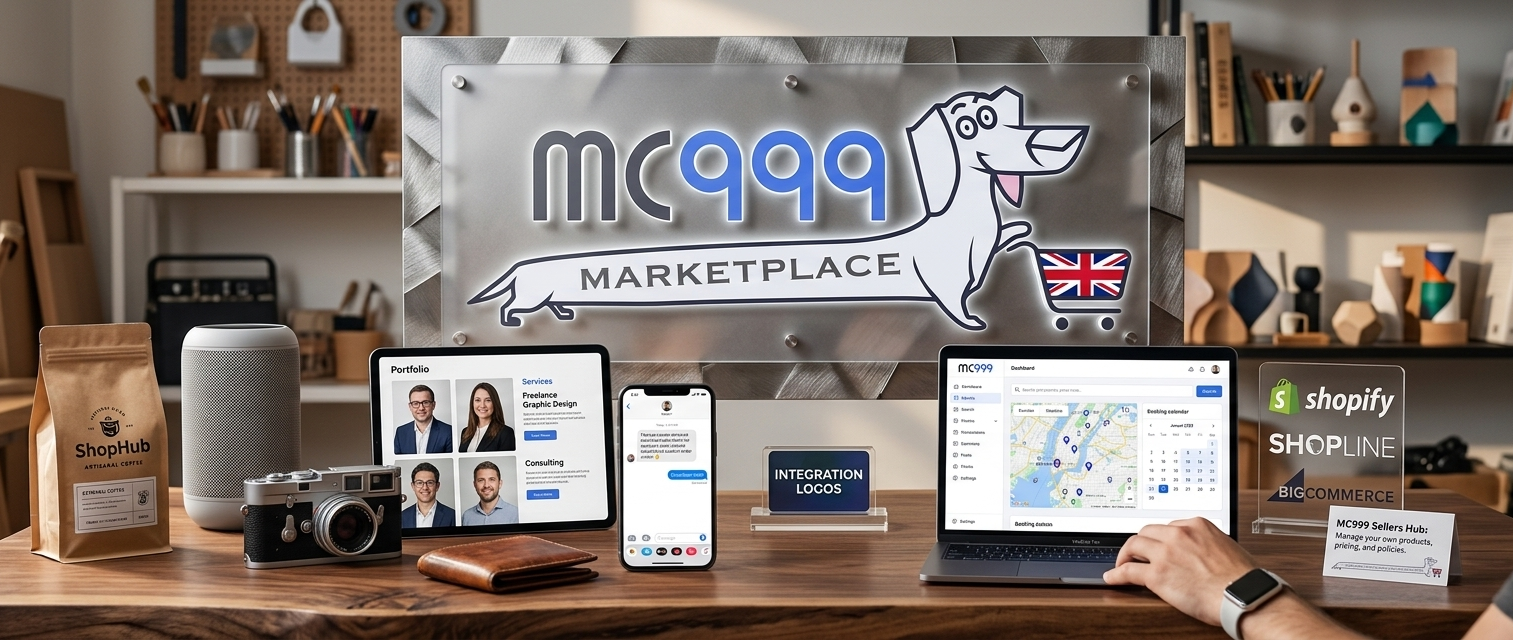
Why Mc999 Offers a Modern Alternative
Mc999 is a modern platform designed to support flexible, independent selling.
Unlike traditional marketplaces, Mc999:
- Allows sellers to manage their own products, pricing, delivery, warranties, and return policies
- Does not impose restrictive listing rules or excessive censorship
- Enables direct communication between buyers and sellers
- Supports independent checkout systems for direct payments
Platform Features
Mc999 integrates several tools to enhance usability and visibility:
- ShopHub for structured product listings
- Flea Market for informal and pre-loved goods
- Services section for freelancers and professionals
- Interactive map-based search
- Booking and scheduling system
- Advanced elastic search functionality
Additionally, Mc999 integrates with platforms like Shopify, Shopline, and BigCommerce, enabling seamless migration or hybrid selling strategies.
Final Considerations
Starting an online shop in the UK requires careful planning, the right technical setup, and a consistent marketing strategy. Key success factors include:
- Choosing an appropriate platform
- Ensuring secure and compliant payment processing
- Maintaining fast and reliable website performance
- Implementing effective SEO and marketing strategies
- Providing excellent customer experience and support
Platforms such as Mc999 offer a flexible, seller-centric approach that aligns with modern e-commerce needs, giving businesses greater control over operations and customer relationships.
With the right approach, an online store can become a scalable, sustainable business capable of reaching both UK and international markets.