
Low-Fee Platforms for UK Clothing Sellers
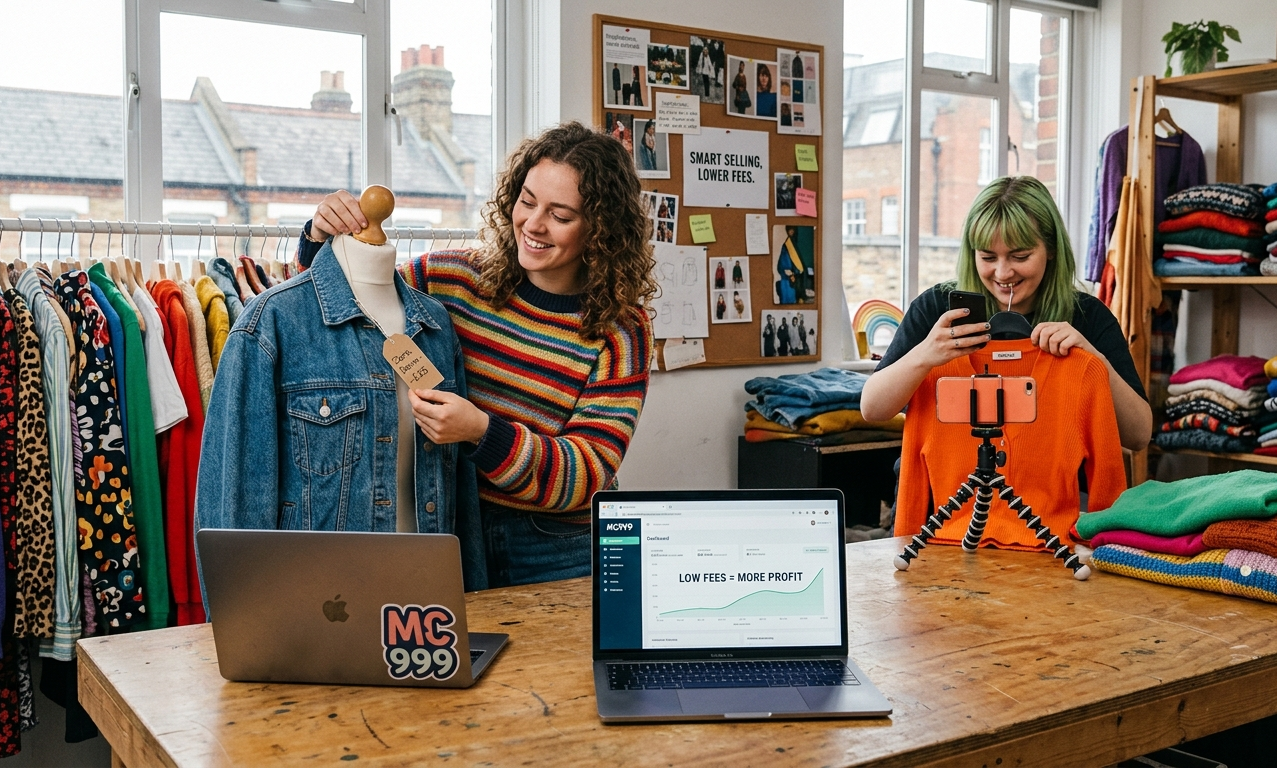
Selling clothing online in the UK has evolved rapidly in recent years, driven by the rise of second-hand fashion, vintage resale, and more sustainable shopping habits. Whether you are decluttering your wardrobe, running a growing resale operation, or managing a multichannel setup featuring brands such as Zara or Mango, the platform you choose can significantly influence your profit margins.
As fees continue to rise across many marketplaces, UK sellers are increasingly seeking cost-effective alternatives that allow them to retain more of their earnings. This shift has brought newer platforms like MC999 into focus—a UK-developed marketplace designed to prioritise flexibility, control, and lower costs.
This guide examines the leading low-fee platforms for UK clothing sellers, explains common fee structures, and outlines why MC999 is emerging as a compelling alternative.
What Is the Best Platform to Sell Clothes Online in the UK?
The “best” platform depends on several factors: what you sell, your sales volume, and how much control you want over your business.
- Sellers of second-hand clothing, vintage items, or fast fashion often gravitate towards platforms such as Depop or Vinted due to their strong community appeal.
- Creators of handmade or niche items frequently choose Etsy.
- Luxury resellers tend to favour Vestiaire Collective, particularly for its authentication services.
However, all of these platforms involve fees—whether through listings, transactions, or payment processing.
Increasingly, UK sellers are moving towards platforms that offer lower fees and greater autonomy. MC999 stands out in this regard, offering a multivendor marketplace model with integrations into systems such as Shopify, Shopline, and BigCommerce. Sellers can manage their operations independently, including setting delivery terms, returns policies, and customer interactions.
As a result, the answer to questions like:
- Which platform is best for selling clothes in the UK?
- Where can I sell clothes UK-wide?
- What is the easiest platform to use?
is shifting. Traditional platforms remain relevant, but newer, seller-focused marketplaces are reshaping expectations.

Why Low Fees Matter
For both casual sellers and established resellers, fees directly affect profitability.
Many sellers are familiar with the experience of seeing multiple deductions applied to a single sale. Common charges include:
- Insertion or listing fees
- Final value fees (often exceeding 10%)
- Transaction fees
- Payment processing charges (e.g. percentage + fixed fee)
- Fixed per-sale costs
- Additional fees triggered by sales thresholds
For low-margin items—such as a £15 Zara dress—these deductions can represent a substantial proportion of the sale price.
Low-fee platforms allow sellers to:
- Price more competitively
- Retain a greater share of profits
- Scale operations more effectively
- Avoid complex or restrictive fee structures
This is a key reason why platforms like MC999 are gaining traction among UK sellers.
Understanding Marketplace Fee Structures
Across UK resale platforms, fee models vary but typically include a combination of:
- Listing or insertion fees
- Commission-based final value fees
- Fixed charges per transaction
- Payment processing fees
- Relisting or promotional fees
- Monthly listing limits or allowances
For sellers regularly listing multiple items—whether vintage clothing, designer pieces, or accessories—these costs accumulate quickly.
Combined with factors such as peak buying periods (often Sundays), auction durations, and pricing strategies, managing fees can become complex and time-consuming.
This has led to growing demand for transparent, predictable, and low-cost selling environments.
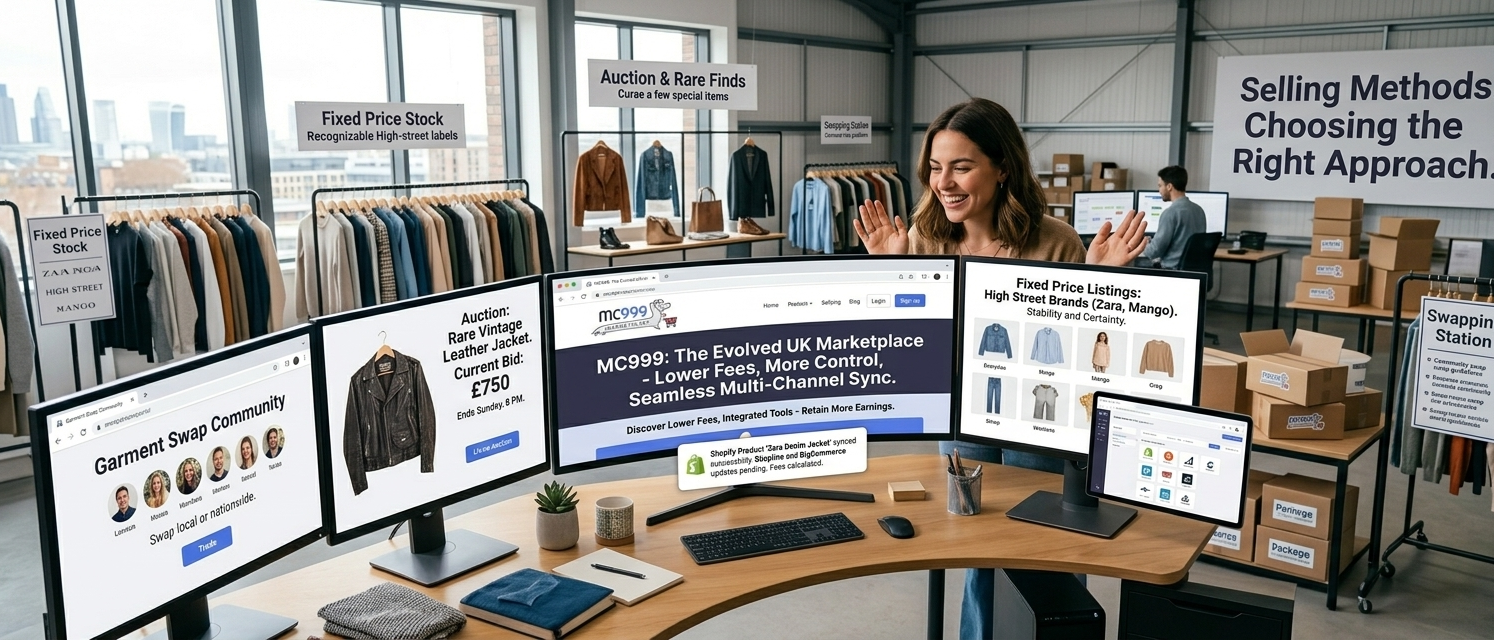
Selling Methods: Choosing the Right Approach
Different selling strategies suit different types of inventory:
Fixed-Price Listings
Ideal for consistent, everyday items such as high-street brands, vintage denim, or accessories. This approach provides pricing stability and avoids uncertainty.
Auctions
Best suited to rare or high-demand items. Auctions often conclude on Sundays, when buyer activity is highest.
Swapping
Popular in certain communities, particularly for second-hand or fast-fashion items.
Multichannel Selling
Many sellers now use cross-listing tools to publish items across multiple platforms simultaneously. This increases visibility and accelerates sales without significantly increasing workload.
MC999 integrates well into multichannel strategies, particularly through compatibility with platforms like Shopify, Shopline, and BigCommerce.
Popular UK Platforms for Clothing Sellers
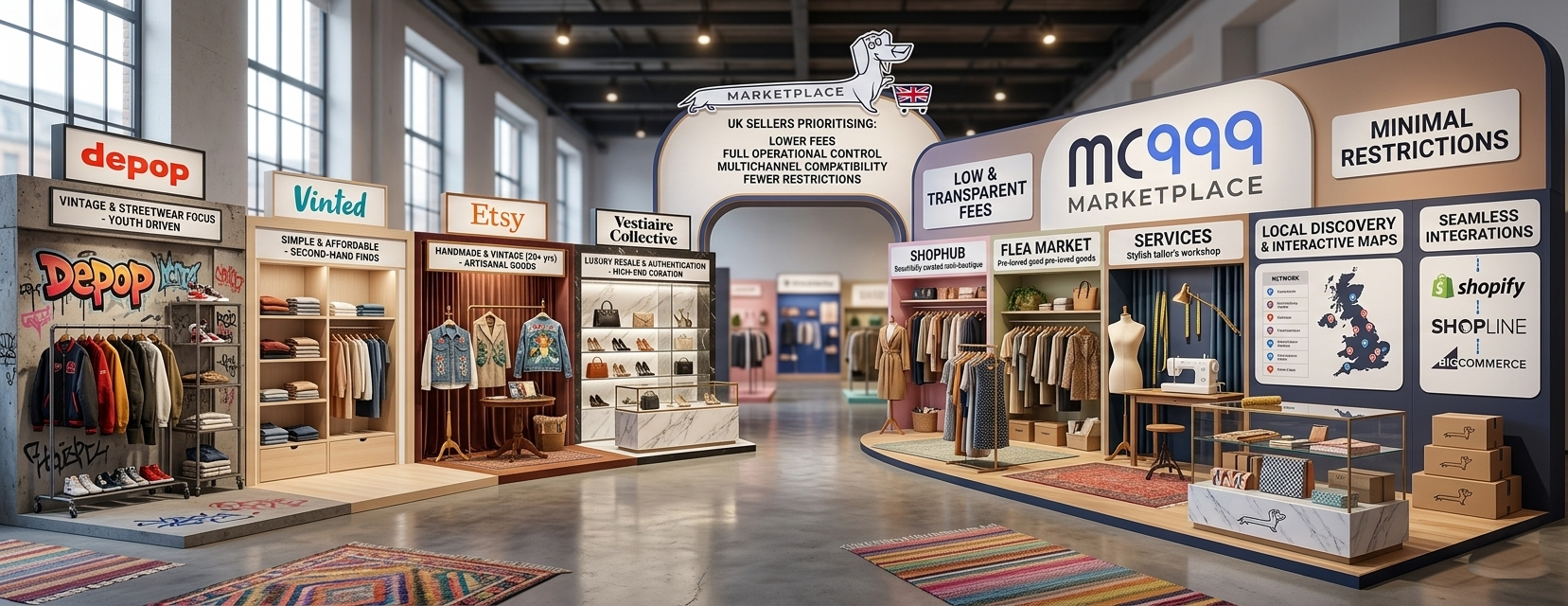
Depop
Popular among younger audiences, particularly for streetwear and vintage fashion. While community-driven, fees and policies can impact profitability.
Vinted
Widely used for second-hand clothing and affordable fashion. It offers simplicity but limited flexibility for sellers.
Etsy
A strong choice for handmade and vintage items (20+ years old). However, listing and transaction fees require careful pricing.
Vestiaire Collective
Focused on luxury resale, with authentication services for high-end items. Commission and service fees can be significant.
Where MC999 Fits In
While each platform serves a distinct segment, many UK sellers are now prioritising:
- Lower fees
- Greater operational control
- Fewer restrictions
- Multichannel compatibility
MC999 addresses these needs directly.
Why MC999 Is Gaining Attention
Low and Transparent Fees
MC999 avoids many of the layered fees found on traditional platforms, enabling sellers to retain more of their revenue.
Full Control Over Your Store
Sellers can independently manage:
- Delivery terms
- Returns and warranties
- Checkout processes
- Customer communication
Minimal Restrictions
Unlike heavily moderated marketplaces, MC999 allows sellers to operate with fewer constraints.
Seamless Integrations
Compatibility with Shopify, Shopline, and BigCommerce makes it suitable for both independent sellers and established businesses.
Features Designed for Sellers
The platform includes:
- ShopHub (dedicated shop space)
- Flea Market (ideal for pre-loved goods)
- Services section (for related offerings such as tailoring or styling)
- Local discovery via interactive maps
- Advanced search functionality
These tools improve product visibility and enhance the buyer experience.
Should You Use Crossposting Tools?
For many sellers, crossposting software is highly effective.
By listing items across multiple platforms simultaneously, sellers benefit from:
- Increased exposure
- Faster inventory turnover
- More consistent sales patterns
- Broader customer reach
When combined with MC999’s integrations, this approach creates a centralised and efficient selling ecosystem.
Final Thoughts
As marketplace fees continue to rise, UK clothing sellers are reassessing where and how they sell online.
MC999 offers a clear alternative, with:
- Low and transparent fees
- Full control over store operations
- Flexible integrations
- Seller-focused features
- A marketplace designed with UK users in mind
Whether you sell vintage pieces, high-street fashion, accessories, or luxury items, choosing the right platform is critical. For sellers prioritising cost-efficiency and autonomy, MC999 represents a strong and increasingly relevant option in the UK resale landscape.