
Is Selling Online in the UK Still Worth It? The Hidden Crisis in Retail
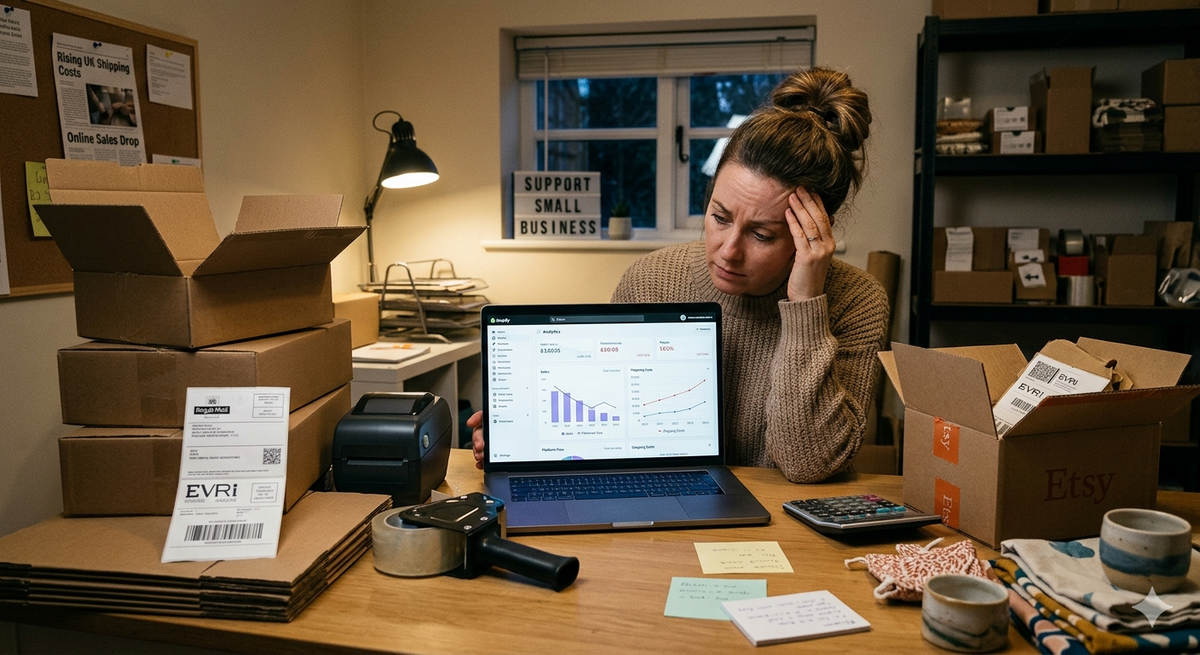
Selling online in the UK has long been viewed as a pathway to independence and profitability for small e-commerce brands, independent entrepreneurs, and side-hustle sellers. From Shopify websites to Amazon Marketplace, Etsy shops, and peer-to-peer platforms, the opportunities once appeared virtually limitless.
However, in 2026, many UK sellers are asking a more cautious question: is selling online still worth it? Rising platform fees, tightening profit margins, logistical challenges, and increasing marketing demands have transformed what was once a low-barrier entry point into a complex and highly competitive environment.
This article examines the emerging pressures within online retail, the key challenges facing small sellers, practical strategies to maintain profitability, and how platforms such as MC999 are helping sellers adapt to a rapidly evolving marketplace.
The Current State of Online Selling in the UK
Over the past decade, UK e-commerce has experienced significant growth, with more than 30% of retail sales now taking place online. Major marketplaces such as Amazon, eBay, Etsy, and Shopify continue to dominate the landscape.
Yet this growth has brought increased complexity:
- Intensifying competition: Thousands of new sellers enter the market each month.
- Higher customer expectations: Consumers expect fast delivery, free shipping, and hassle-free returns.
- Algorithm-driven visibility: Listings must perform well to appear in search results.
- Rising costs: Platform fees and advertising spend are steadily eroding margins.
While the market remains full of opportunity, success now requires operational efficiency, strong marketing capabilities, and a clear marketplace strategy.
Key Challenges Facing UK Online Sellers
Shrinking Profit Margins
One of the most pressing issues is the steady decline in profit margins:
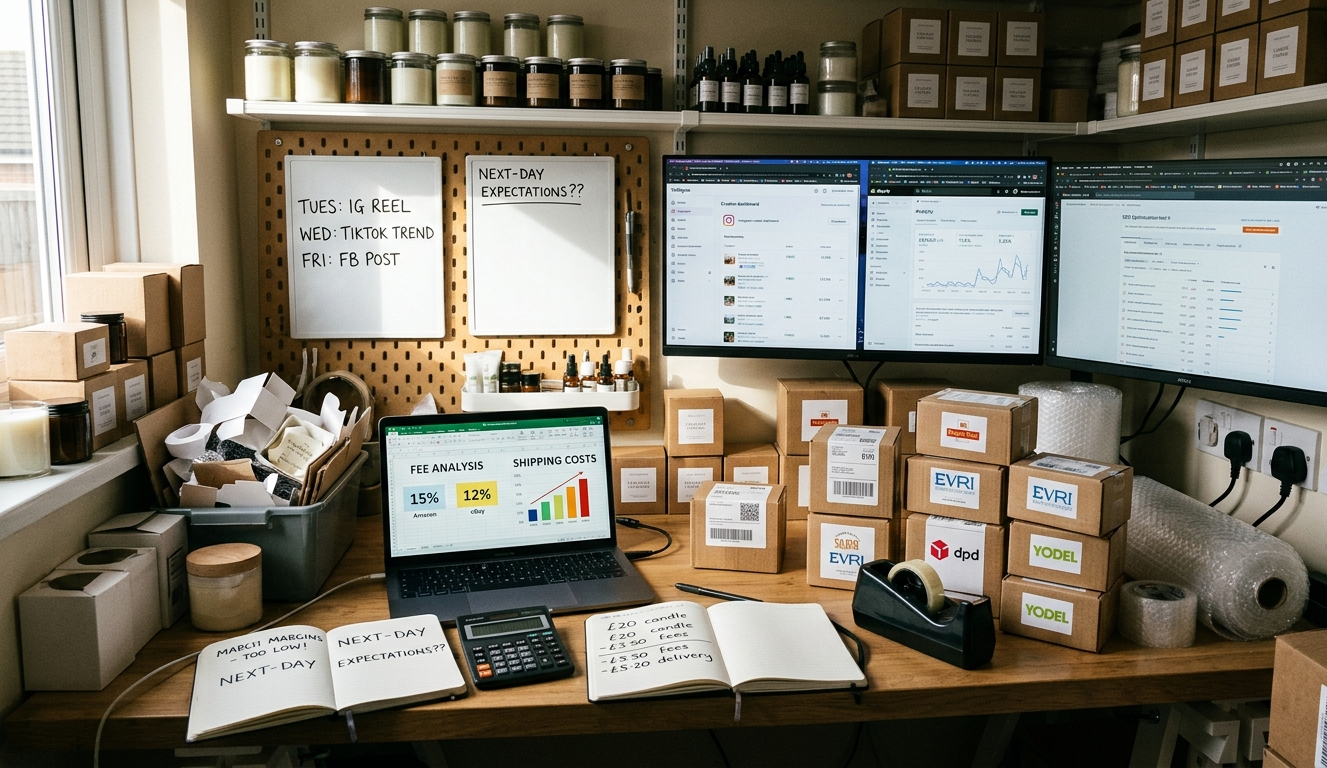
- Platform fees on marketplaces such as Amazon and eBay can reach 10–15% per sale, excluding payment processing costs.
- Shipping costs continue to rise due to fuel prices and labour shortages.
- Packaging, returns handling, and branding add further expense.
Example: A seller offering handmade candles at £20 on Etsy may lose up to 30% through combined costs, significantly limiting scalability without careful optimisation.
Practical steps:
- Bundle products to increase average order value
- Negotiate bulk shipping rates
- Incorporate all costs into pricing strategies
Shipping and Fulfilment Challenges
Delivery performance is critical in the UK market, where customers increasingly expect next-day, tracked shipping.
Common issues include:
- Managing multiple courier services across platforms
- Lost or delayed shipments
- Inefficient returns and refund processes
Recommendations:
- Use third-party fulfilment providers where viable
- Offer local collection options to reduce costs
- Maintain clear and transparent return policies
Marketing Fatigue and Technical Complexity
Many small sellers face significant pressure managing marketing alongside operations:
- Running campaigns across Instagram, TikTok, and Facebook Marketplace
- Monitoring ad performance, SEO, and email marketing
- Keeping up with platform updates and algorithm changes
A single seller operating both an Etsy shop and a Shopify site may spend 15–20 hours per week on marketing alone.
Solutions:
- Consolidate tools into unified dashboards
- Automate scheduling and repetitive tasks
- Focus only on platforms delivering the highest return on investment
Managing Multiple Marketplaces
Selling across multiple platforms offers reach but increases complexity:
- Maintaining consistent listings across Amazon, eBay, Etsy, and others
- Synchronising inventory to avoid overselling
- Adapting to different fee structures and algorithms
Best practices:
- Use centralised inventory management systems
- Tailor listings per platform while maintaining brand consistency
- Regularly assess which channels deliver the strongest margins
The Hidden Crisis Behind E-Commerce Growth
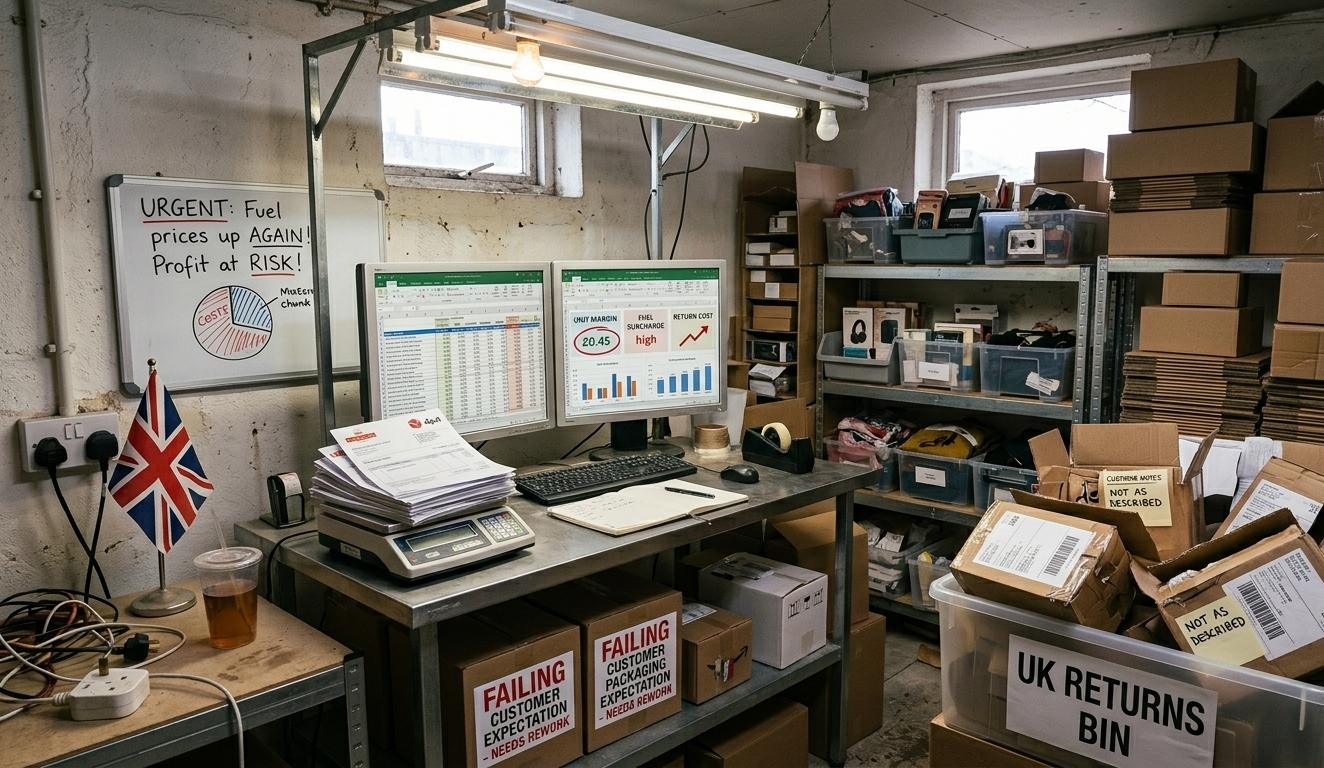
Despite continued growth in online retail, its sustainability—particularly for smaller sellers—is increasingly uncertain.
Long-Term Profitability Concerns
Many sellers focus on revenue without fully considering sustainability:
- Narrow margins limit reinvestment
- Operational costs continue to rise
- Scale and efficiency increasingly determine success
Smaller and part-time sellers often struggle to compete with larger operations that benefit from economies of scale.
Rising Customer Expectations
Today’s UK consumers expect:
- Fast, reliable delivery
- Professional packaging and presentation
- Transparent returns and refund processes
Failure to meet these expectations can result in negative feedback and reduced visibility within marketplace algorithms.
Strategies for Staying Profitable
Improve Operational Efficiency
Streamlining operations is essential:
- Standardise packaging and batch shipping processes
- Automate inventory and order management
- Reduce reliance on unnecessary tools
Efficient systems free up time and improve margins.
Take a Strategic Approach to Multi-Platform Selling
Rather than spreading resources too thin:
- Focus on platforms aligned with your niche and logistics capabilities
- Optimise listings for each platform
- Use peer-to-peer marketplaces like MC999 for additional flexibility
Build Customer Loyalty
Retaining customers is more cost-effective than acquiring new ones:
- Provide reliable delivery and accurate timelines
- Offer incentives for repeat purchases
- Deliver responsive, professional customer service
Strong customer relationships improve both retention and marketplace performance.
How MC999 Supports UK Sellers
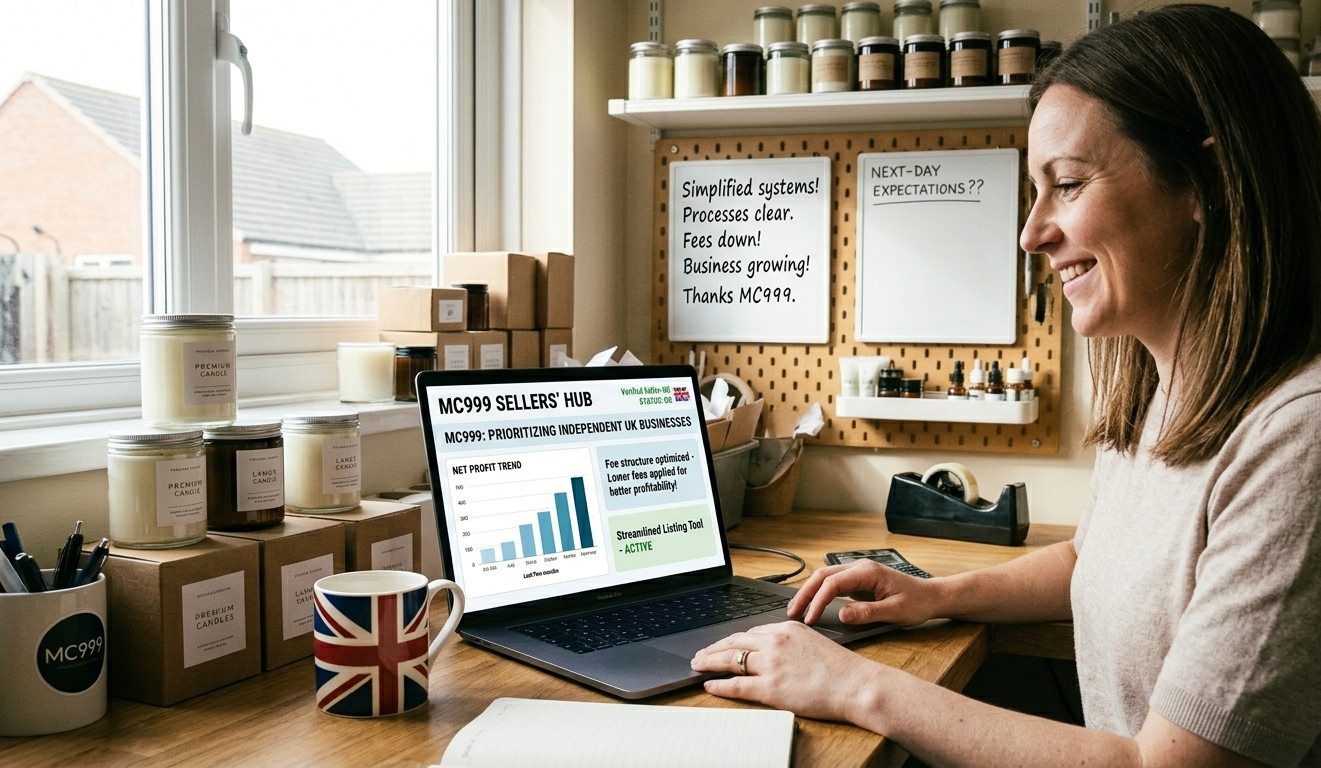
Seller-first marketplaces are becoming increasingly important in this environment. MC999 is designed to address common frustrations faced by independent sellers:
- Transparent processes that reduce platform friction
- Community-driven trust, supported by verified users and feedback systems
- Simplified operations, including streamlined listing tools and dashboards
- Fair fee structures that support profitability
By prioritising independent sellers and small businesses, MC999 offers a more balanced alternative within the e-commerce ecosystem.
The Future of Online Selling in the UK
Several trends are shaping the future of the industry:
- Increased adoption of automation and AI tools
- Growth of community-driven marketplaces
- Continued rise in customer expectations
- Greater emphasis on sustainable, profitable business models
Online selling remains viable, but only for those who adapt strategically and operate efficiently.
Final Thoughts
Online selling in the UK is at a turning point. While the sector continues to expand, small sellers face increasing pressure from rising costs, operational complexity, and heightened expectations.
The challenges are significant, but not insurmountable.
Key takeaways:
- Prioritise profitability through operational efficiency
- Use multi-platform strategies selectively
- Invest in customer trust and retention
- Leverage seller-focused platforms such as MC999
Sellers who adapt to these conditions can still build sustainable, profitable businesses in an increasingly demanding e-commerce landscape.
FAQs
Why is selling online in the UK becoming more difficult?
Rising fees, higher shipping costs, increased competition, and demanding customer expectations are reducing margins and making visibility more challenging.
How can small sellers remain profitable in 2026?
By improving efficiency, focusing on high-performing platforms, optimising pricing, and prioritising customer retention.
Which marketplaces are most suitable for UK resellers?
Amazon, eBay, Etsy, Shopify, and peer-to-peer platforms like MC999 all offer viable opportunities depending on product type and target audience.
How can sellers avoid burnout?
By automating repetitive tasks, simplifying their technology stack, and concentrating efforts on the most effective marketing channels.
What distinguishes a seller-first platform like MC999?
Its emphasis on transparency, fair fees, and simplified processes helps reduce operational strain while maintaining trust between buyers and sellers.