
Sell Your Art Online: A Beginner’s Guide to Making a Profit (2026)
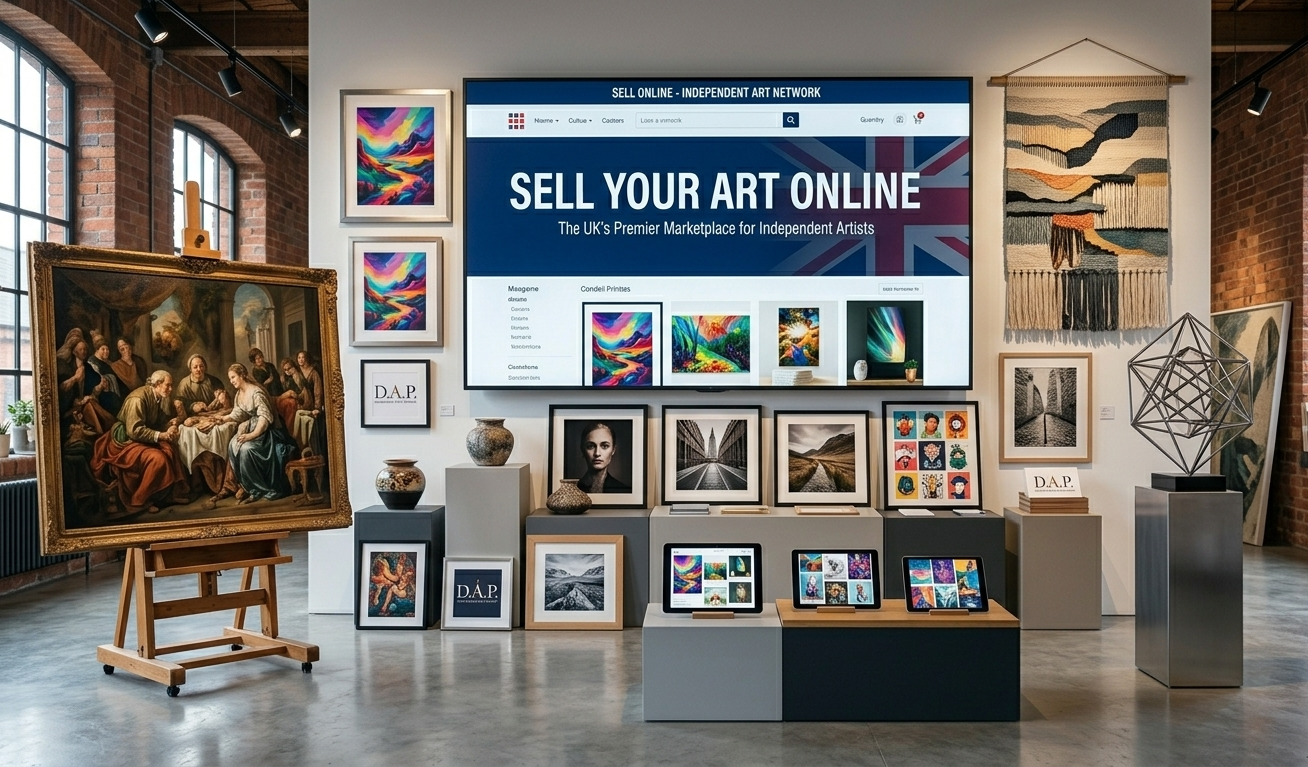
Selling art online in 2026 is one of the most accessible and commercially viable routes for artists. Whether you are a digital illustrator, painter, sculptor or creative entrepreneur, understanding how to operate online is essential for building a sustainable practice.
The global art market continues to expand, with strong demand across fine art, digital work and merchandise-led models. Platforms such as Shopify, Etsy and Amazon Handmade enable access to international audiences, while print-on-demand services and modern ecommerce strategies allow artists to scale efficiently.
This guide outlines the key steps—from selecting a business model through to marketing, fulfilment and growth.
1. Choose the Right Business Model
Your chosen model will determine your workflow, pricing and long-term profitability.
Selling Directly
Operating your own website or online shop gives full control over pricing, branding and customer relationships. Platforms like Shopify make it possible to launch a professional store with minimal technical knowledge.
Selling Through Galleries
Physical and online galleries can enhance credibility and exposure. However, commissions typically range from 30% to 60%, which must be factored into pricing.
Licensing Your Work
Licensing allows third parties to use your artwork on products, campaigns or media. This creates scalable, often passive, income without managing inventory.
Brand Collaborations
Partnering with brands on limited-edition releases or product lines can significantly extend your reach and provide additional marketing support.
Curating Other Artists
Some artists evolve into curators, building marketplaces that showcase multiple creators and generate revenue through commissions.
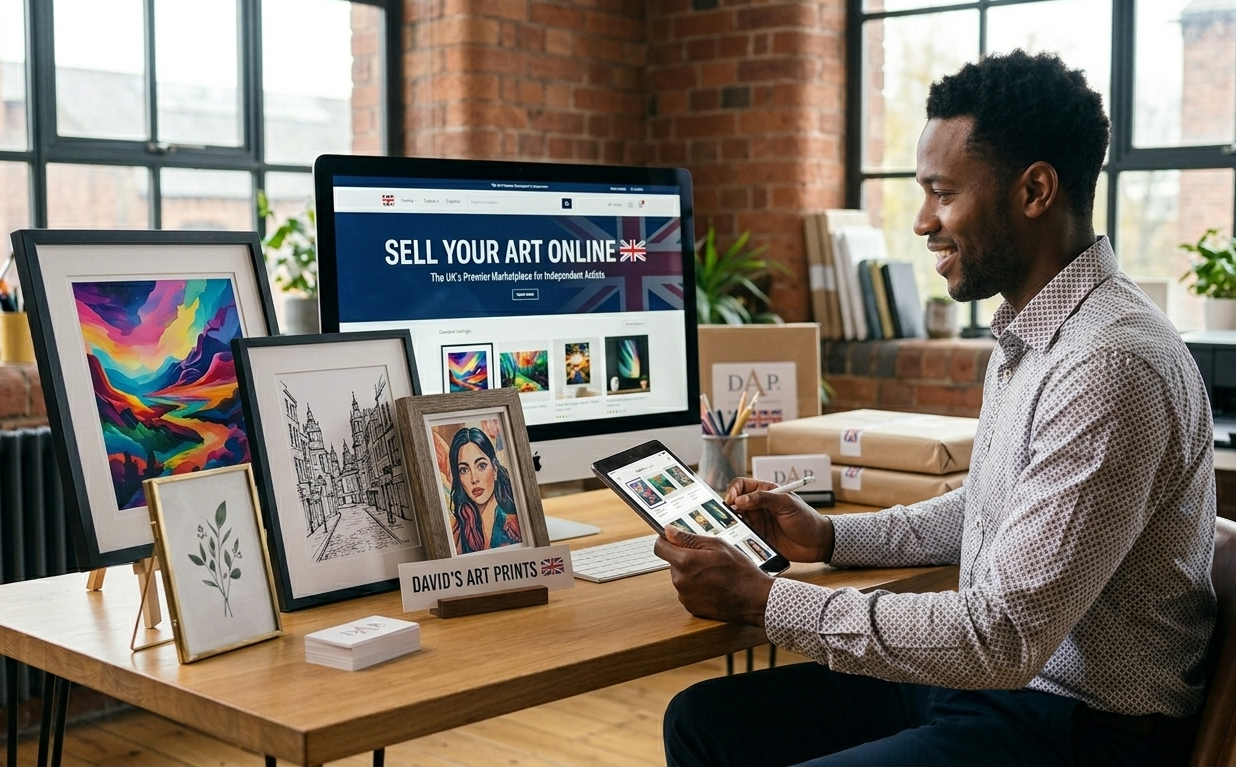
2. Decide What to Sell
A diversified product mix improves both reach and revenue stability.
- Original Art – One-off pieces with higher price points and collector appeal
- Prints – More accessible formats, including limited editions to increase perceived value
- Digital Downloads – Scalable products with no physical fulfilment
- Commissions – Bespoke works with premium pricing potential
- Merchandise – Apparel, homeware and stationery using print-on-demand
3. Photograph or Scan Your Work
High-quality visuals are critical in an online environment.
- Photography: Use consistent lighting and accurate colour representation. Lifestyle imagery can improve engagement.
- Scanning: Essential for digital formats, ensuring high resolution and colour fidelity.
4. Choose a Printing Method
DIY Printing
Suitable for small-scale operations, offering full control but limited scalability.
Professional Print Workshops
Local print studios can provide consistent quality, including giclée printing and framing.
Print-on-Demand
Services such as Redbubble and Fine Art America allow you to sell without holding stock, making them ideal for testing and scaling.
5. Set Edition Types
- Open Edition – Unlimited prints at a fixed price
- Limited Edition – Fixed quantities, signed and numbered, increasing exclusivity and value
6. Build Your Artist Brand
A strong brand includes your visual identity, tone of voice and narrative. Artists who communicate a clear story and engage consistently with their audience are more likely to generate repeat sales and long-term loyalty.
7. Price Your Work Strategically
Original Art
Factor in materials, time, positioning and market demand.
Prints
Balance accessibility with perceived value. Limited editions can justify premium pricing, while open editions target broader audiences.
8. Build an Ecommerce Store
Platform and Design
Select a platform such as Shopify or Etsy with themes optimised for high-resolution imagery and mobile responsiveness.
Essential Pages
Include:
- About
- Contact
- Product pages
- Collections
- Policies (shipping, returns, terms)
Tools and Integrations
Use apps to enhance SEO, marketing, analytics and multichannel selling.
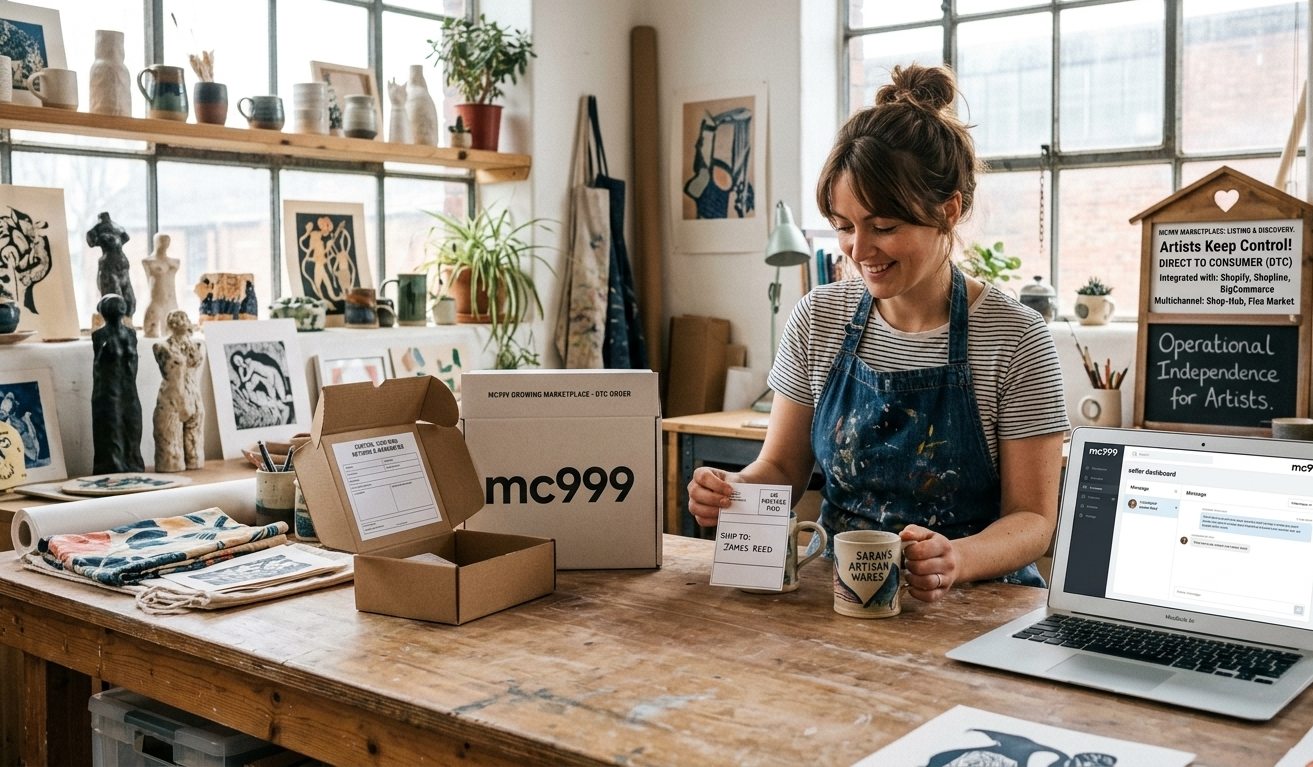
MC999 Growing Marketplace
MC999 Marketplace operates as a listing and discovery platform, enabling artists to maintain full control over transactions and customer relationships. Integration with platforms like Shopify, Shopline and BigCommerce supports:
- Direct customer interaction
- Independent checkout and payments
- Control over delivery, returns and warranties
- Multichannel exposure via Shop-Hub, Flea Market and Services
This model is suited to direct-to-consumer (DTC) artists seeking operational independence.
9. Expand Sales Channels
Craft Marketplaces
Etsy and similar platforms attract niche, handmade-focused audiences.
Art Marketplaces
Platforms such as Saatchi Art and Artfinder provide access to collectors globally.
Social Commerce
Instagram, TikTok and Facebook Shops enable direct selling alongside content and community engagement.
Online Galleries
Curated digital galleries can strengthen positioning and reach targeted audiences.
10. Sell Offline
Physical channels remain valuable:
- Pop-up shops
- Art fairs and markets
- Retail consignment
- Exhibitions
These create direct engagement and reinforce brand credibility.
11. Consider Gallery Partnerships
Strategic gallery relationships can enhance visibility and facilitate higher-value sales. Ensure alignment with your brand and long-term objectives.
12. Market Your Art
Effective marketing combines:
- Social media content
- Influencer collaborations
- Paid advertising (Google and social platforms)
- Email marketing
- SEO and content marketing
Consistent storytelling and behind-the-scenes insights are particularly effective in building audience trust.
13. Package and Ship Professionally
Standard Shipping
Use protective tubes, envelopes or sleeves for prints.
High-Value Artwork
Employ specialist couriers, robust packaging and insurance.
Print-on-Demand Fulfilment
POD providers handle production and logistics, reducing operational burden.
Insurance
Protect high-value items against loss or damage in transit.
14. Understand Copyright and Protection
Artists should actively protect their intellectual property. This includes understanding copyright law, using watermarks where appropriate and exploring licensing opportunities.
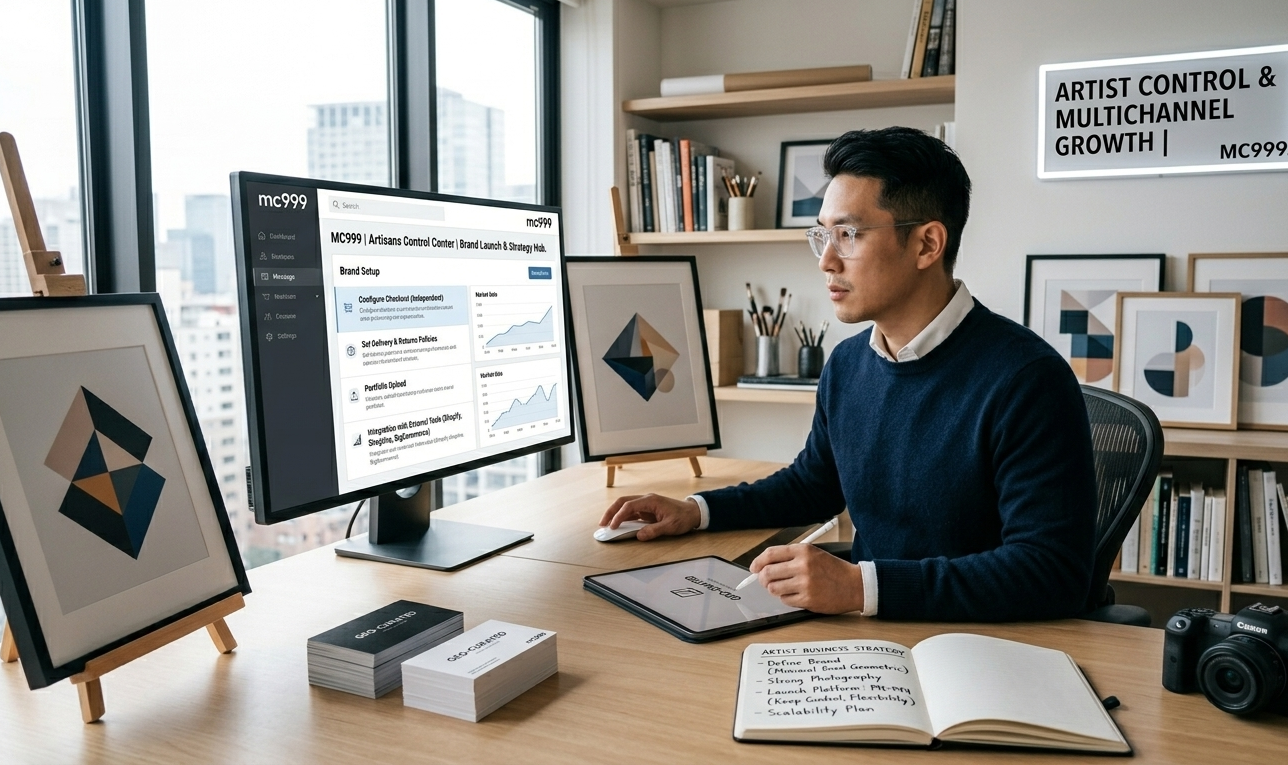
Start Selling Art Online
Launching an online art business requires a combination of creative output and commercial strategy. With strong presentation, a clear brand and effective use of ecommerce tools, artists can build sustainable and scalable businesses.
Platforms such as MC999 offer an alternative model focused on control, flexibility and multichannel growth—allowing artists to expand without relinquishing ownership of their work or customer relationships.
FAQ
How do I start selling art online?
Define your niche, create high-quality work, set up an online store and begin marketing to a clearly defined audience.
Can I sell digital art for profit?
Yes. Digital products are highly scalable and can be distributed globally, particularly when combined with print-on-demand or licensing.
What is the best platform to sell art online?
Popular options include Shopify, Etsy, Amazon Handmade and Saatchi Art. MC999 is suitable for artists seeking greater operational control.
How much does it cost to start?
Costs vary widely—from a few hundred pounds for digital-only models to several thousand for physical production and marketing.
How should I price my art?
Consider costs, positioning, edition type and target audience. Limited editions typically command higher prices.
Can I sell internationally?
Yes. Multi-currency payments, global shipping and international marketplaces make worldwide sales accessible.