
The Ultimate List of Verified Dropshipping Suppliers in 2026
For online entrepreneurs, store owners and those new to e-commerce, sourcing reliable suppliers remains the foundation of a profitable dropshipping business. In 2026, the industry is more competitive and technologically advanced than ever, with sophisticated supplier platforms, faster international shipping, and powerful automation tools enabling rapid scale.
The challenge is no longer access—it is selection. Distinguishing genuinely verified, high-quality suppliers from those that could undermine your business is critical. This guide provides a structured overview of the best dropshipping suppliers in 2026, along with practical methods for verification and operational success.
What Defines a Top Dropshipping Supplier?
A strong supplier does more than fulfil orders. The most effective partners provide:
- Competitive and stable pricing
- Fast, reliable shipping across key markets
- Accurate inventory management
- High-quality, well-curated product catalogues
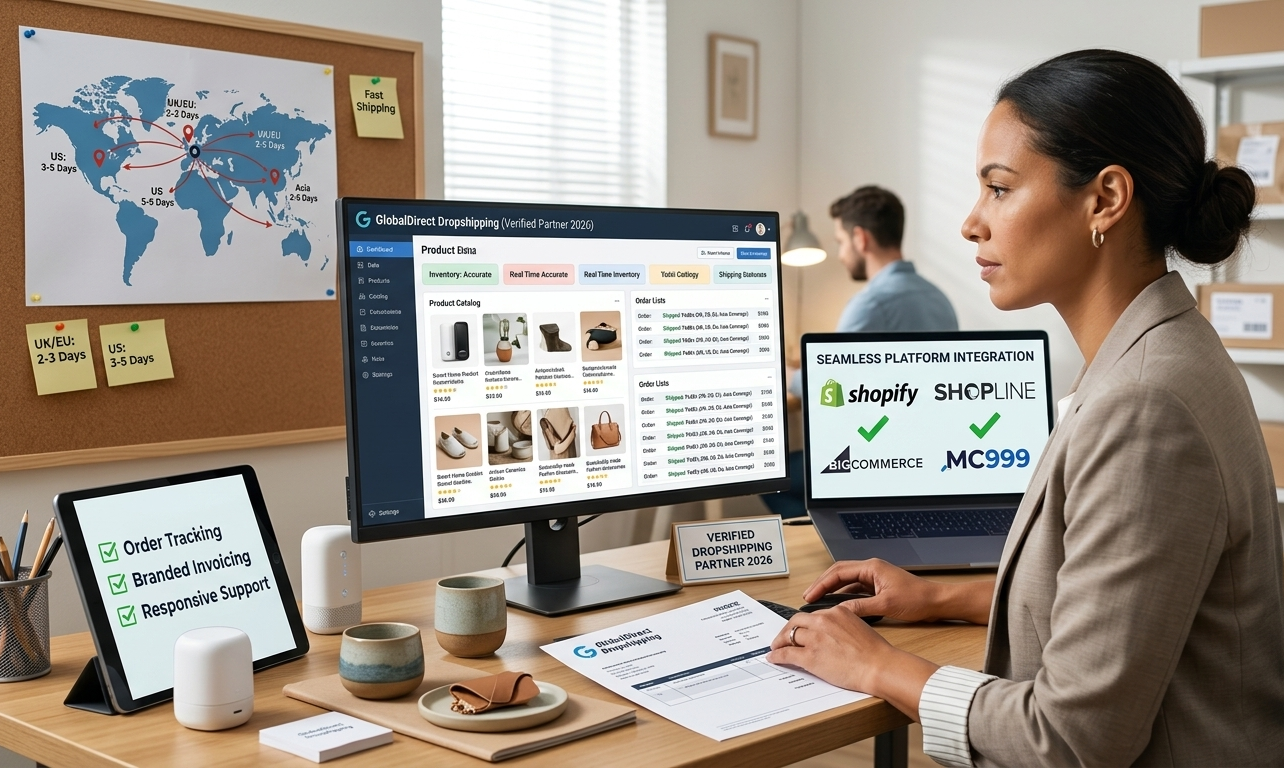
- Seamless integration with platforms such as Shopify, Shopline, BigCommerce, and MC999
Verified suppliers typically also offer branded invoicing, order tracking, and responsive customer support.
Key Evaluation Criteria
When assessing suppliers, focus on:
- Shipping Coverage – Can they reliably serve your target markets (UK, Europe, US, Asia)?
- Product Range – Do they offer trending, profitable products relevant to 2026 demand?
- Platform Integration – Do they connect easily with automation tools and marketplaces?
- Fulfilment Reliability – Are inventory levels accurate and orders dispatched on time?
Verified Dropshipping Suppliers to Consider in 2026
1. AliExpress
Best for: Beginners and product testing
AliExpress remains a core entry point into dropshipping. Its vast product catalogue allows entrepreneurs to test multiple niches quickly with minimal upfront investment. Integration with automation tools simplifies order management, while supplier ratings help reduce risk.
Considerations: Delivery times can vary, and product quality is not always consistent.
2. CJ Dropshipping
Best for: Private labelling and global fulfilment
CJ Dropshipping offers warehouses across multiple regions, enabling faster delivery. It is particularly useful for businesses seeking branded products and more control over fulfilment processes.
Considerations: Some fees apply, and onboarding may take time.
3. Spocket
Best for: UK and European markets
Spocket focuses on suppliers based in the US and Europe, making it suitable for businesses prioritising shorter delivery times and higher product standards. Real-time inventory syncing and branded invoicing enhance professionalism.
Considerations: Product selection is more limited than larger platforms.
4. Zendrop
Best for: Scaling with brand control
Zendrop supports private labelling and offers fulfilment from US-based warehouses. It is designed for entrepreneurs aiming to build a strong brand while maintaining efficient logistics.
Considerations: Product costs tend to be higher than entry-level platforms.
5. Trendsi
Best for: Fashion-focused stores
Trendsi specialises in women’s fashion and accessories, offering fast shipping and access to current trends. It is particularly suited to niche fashion brands targeting style-conscious audiences.
Considerations: Limited outside the fashion category.
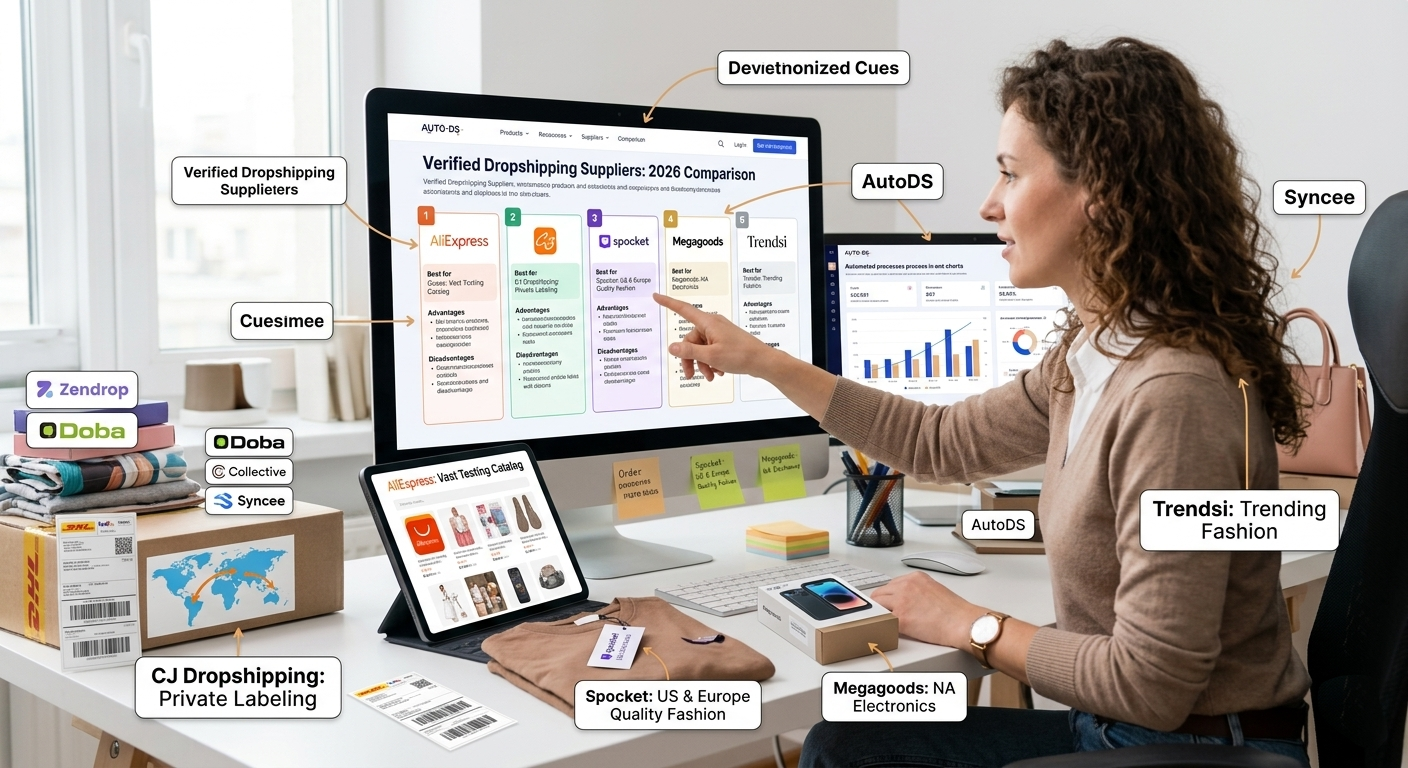
6. Doba
Best for: All-in-one supplier access
Doba aggregates multiple suppliers into a single platform, simplifying sourcing and inventory management. It is useful for beginners seeking a centralised solution.
Considerations: Requires a subscription, with limited customisation options.
7. AutoDS
Best for: Automation-driven businesses
AutoDS is a comprehensive automation platform, offering bulk listing, automatic repricing, and order tracking. It is well suited to scaling operations efficiently.
Considerations: Steeper learning curve for new users.
8. Collective
Best for: Premium and curated product ranges
Collective focuses on boutique-style products and niche branding. It is ideal for stores targeting higher-value customers and building a distinct identity.
Considerations: Smaller catalogue compared to broader platforms.
9. Syncee
Best for: Multi-vendor and scalable stores
Syncee provides access to a large supplier network with verified reviews and automated product feeds. It enables straightforward comparison between suppliers.
Considerations: Subscription required for full functionality.
10. Megagoods
Best for: Electronics-focused stores
Megagoods specialises in consumer electronics and offers reliable fulfilment within North America. It is a strong option for technology-focused e-commerce businesses.
Considerations: Limited global shipping reach.
How to Choose the Right Supplier
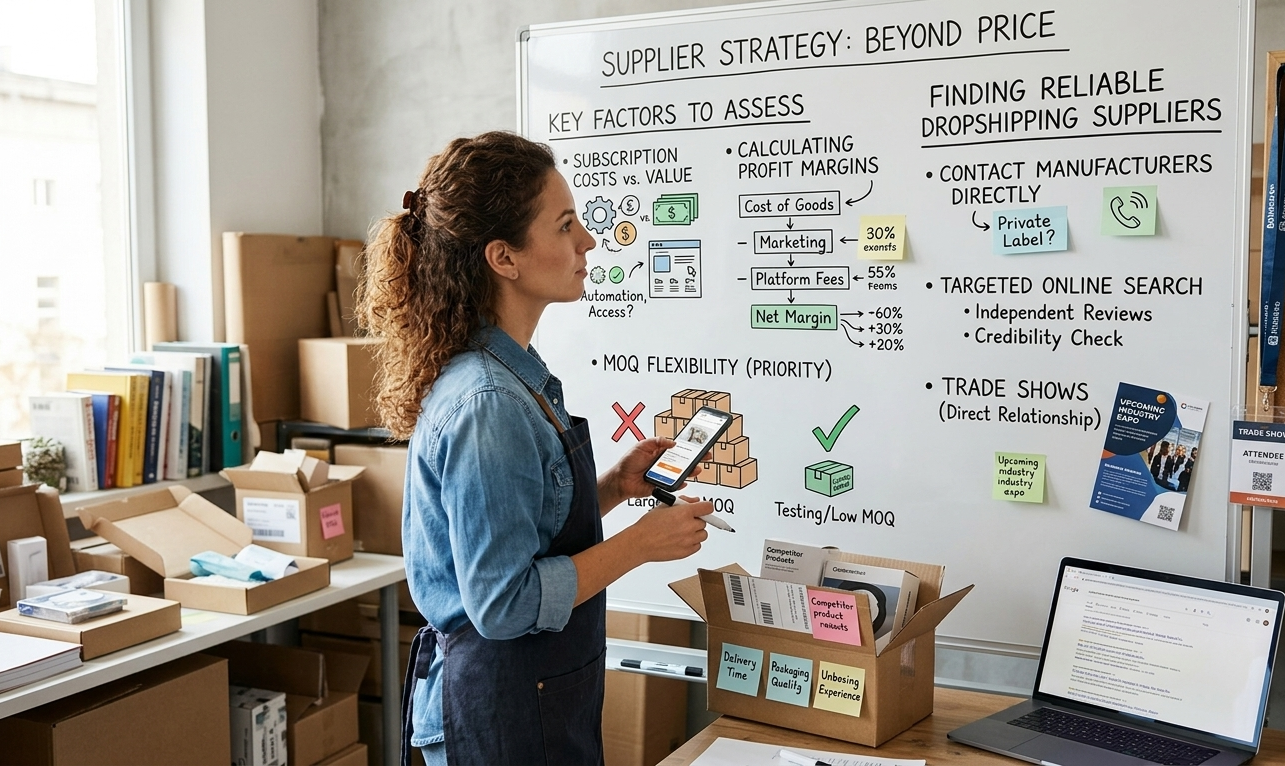
Supplier selection should be approached strategically rather than purely on price.
Key Factors to Assess
- Subscription Costs
Determine whether platform fees align with the value provided, including automation and supplier access. - Profit Margins
Ensure pricing allows sufficient margin after marketing, platform fees, and operational costs. - Minimum Order Quantities (MOQ)
Prioritise flexibility, especially when testing new products or entering new markets.
How to Find Reliable Dropshipping Suppliers
Effective sourcing requires a combination of research and validation.
Practical Methods
- Contact Manufacturers Directly
Many manufacturers offer dropshipping or private label arrangements upon request. - Targeted Online Searches
Use specific queries and verify supplier credibility through independent reviews. - Order Competitor Products
Assess delivery times, packaging quality, and overall customer experience firsthand. - Attend Trade Shows
Industry events remain one of the most effective ways to establish direct supplier relationships.
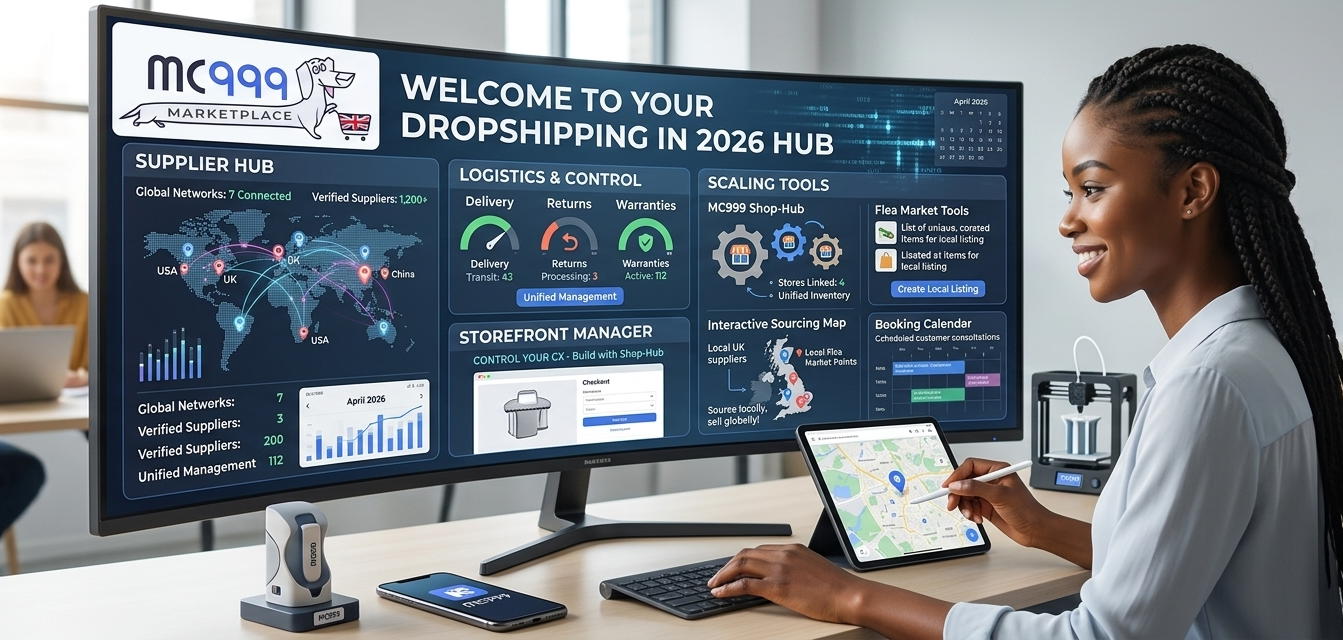
Getting Started with Dropshipping in 2026
Modern e-commerce platforms, combined with integrated marketplaces such as MC999, allow businesses to:
- Connect with multiple supplier networks
- Manage delivery, returns, and warranties
- Maintain control over checkout and customer experience
- Scale using tools such as Shop-Hub, Flea Market features, interactive maps, and booking systems
This infrastructure significantly lowers the barrier to entry while supporting long-term growth.
Final Recommendations for 2026
- Verify suppliers thoroughly – Review ratings, order samples, and assess fulfilment performance
- Leverage automation tools – Reduce manual workload and improve efficiency
- Focus on high-demand products – Prioritise proven and trending niches
- Adopt integrated ecosystems – Platforms like MC999 enhance operational control
- Monitor performance consistently – Track delivery times, returns, and customer feedback
A well-structured supplier network, combined with the right tools and disciplined execution, positions a dropshipping business for sustainable growth in 2026.
Frequently Asked Questions
What is dropshipping?
A retail fulfilment model where products are shipped directly from the supplier to the customer, removing the need for inventory storage.
How do I find suppliers?
Through supplier directories, e-commerce integrations, direct manufacturer outreach, and trade events.
Is dropshipping legal?
Yes, provided businesses comply with tax regulations, import laws, and consumer protection standards.
Is dropshipping still profitable in 2026?
Yes, particularly when focused on niche markets, reliable suppliers, and automated systems.
Which platforms are best?
Shopify, Shopline, and BigCommerce remain leading options, especially when integrated with supplier tools and marketplaces such as MC999.