
Warehouse Shipping Process Explained: A Complete Retail Guide (2026)
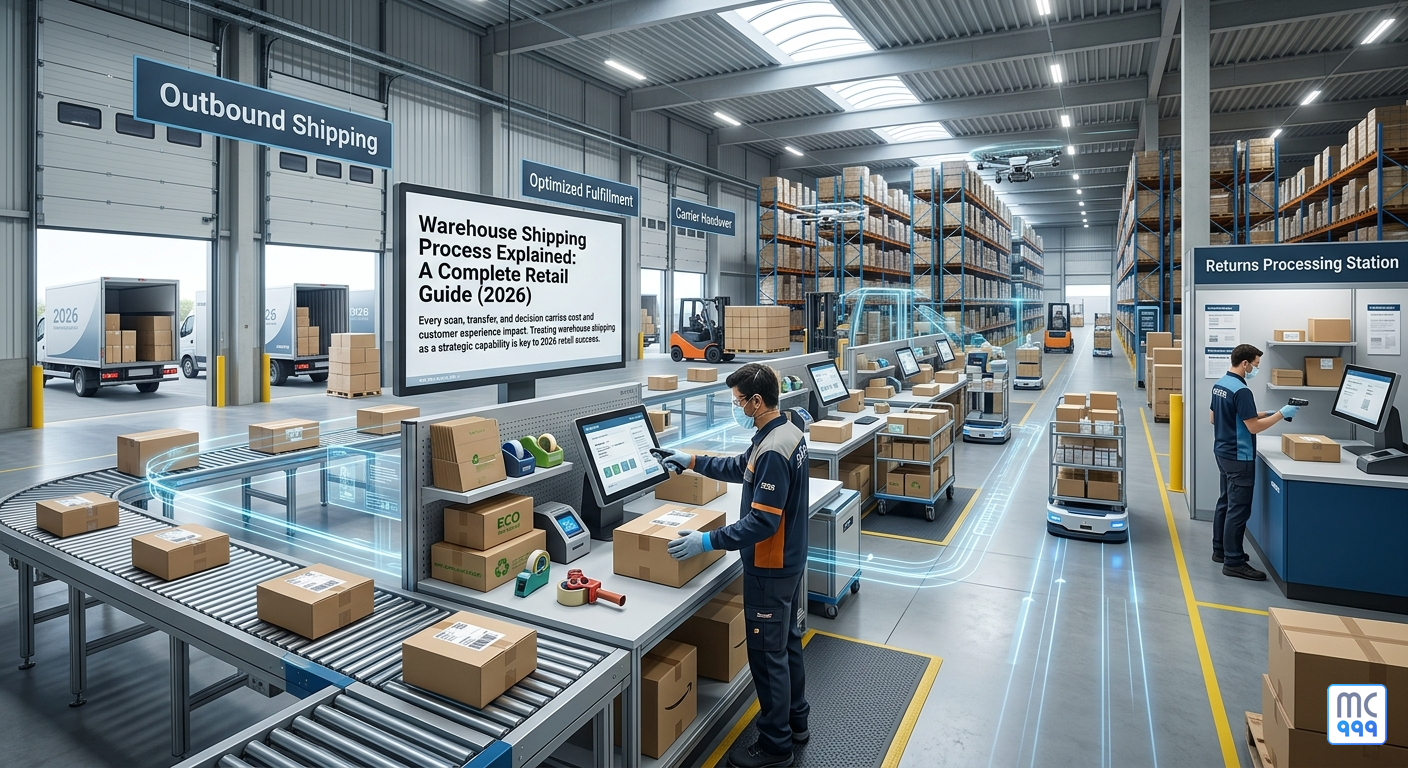
Warehouse shipping is no longer a background function hidden behind storefronts and checkout pages. In 2026, it forms the operational core of modern retail, directly shaping customer satisfaction, profitability, and competitive positioning.
At its core, the warehouse shipping process refers to the end-to-end movement of goods through a warehouse or distribution centre: from inbound receiving, through storage, order fulfilment, packing, carrier handover, and returns handling. Every scan, transfer, and decision within this workflow now carries measurable cost and customer experience impact.
As ecommerce continues to compress delivery expectations, warehouse operations have shifted from cost control to value generation. Businesses that treat warehouse shipping as a strategic capability rather than an operational necessity consistently achieve stronger margins, higher retention, and improved resilience. This guide outlines the full process, key cost drivers, risks, and optimisation approaches relevant to enterprise retail, DTC brands, and scaling ecommerce operators in 2026.
Why Warehouse Shipping Is Critical in Modern Retail
Warehouse shipping sits at the intersection of inventory control, customer experience, and logistics economics. When executed effectively, it enables faster delivery promises, reduced cost per order, and higher inventory accuracy. When poorly managed, it produces delays, errors, and shrinkage that erode margin.
Customer expectations and fulfilment speed
Delivery speed expectations have materially shifted. Standard two-day delivery is now widely expected, while same-day and next-day services are increasingly normal in urban markets supported by regional fulfilment networks.
The warehouse shipping process determines whether these commitments are consistently achievable. Fulfilment speed depends on internal efficiency: how quickly inventory moves from storage to packing and then to dispatch. High-performing operations reduce dwell time through optimised picking routes, balanced labour allocation, and real-time visibility via warehouse management systems (WMS).
Once an order is released from the order management system (OMS), the warehouse must respond immediately. Any delay in picking or packing increases the risk of missed carrier cut-offs, resulting in delayed delivery, reduced customer satisfaction, and lower lifetime value.
Reducing operational cost
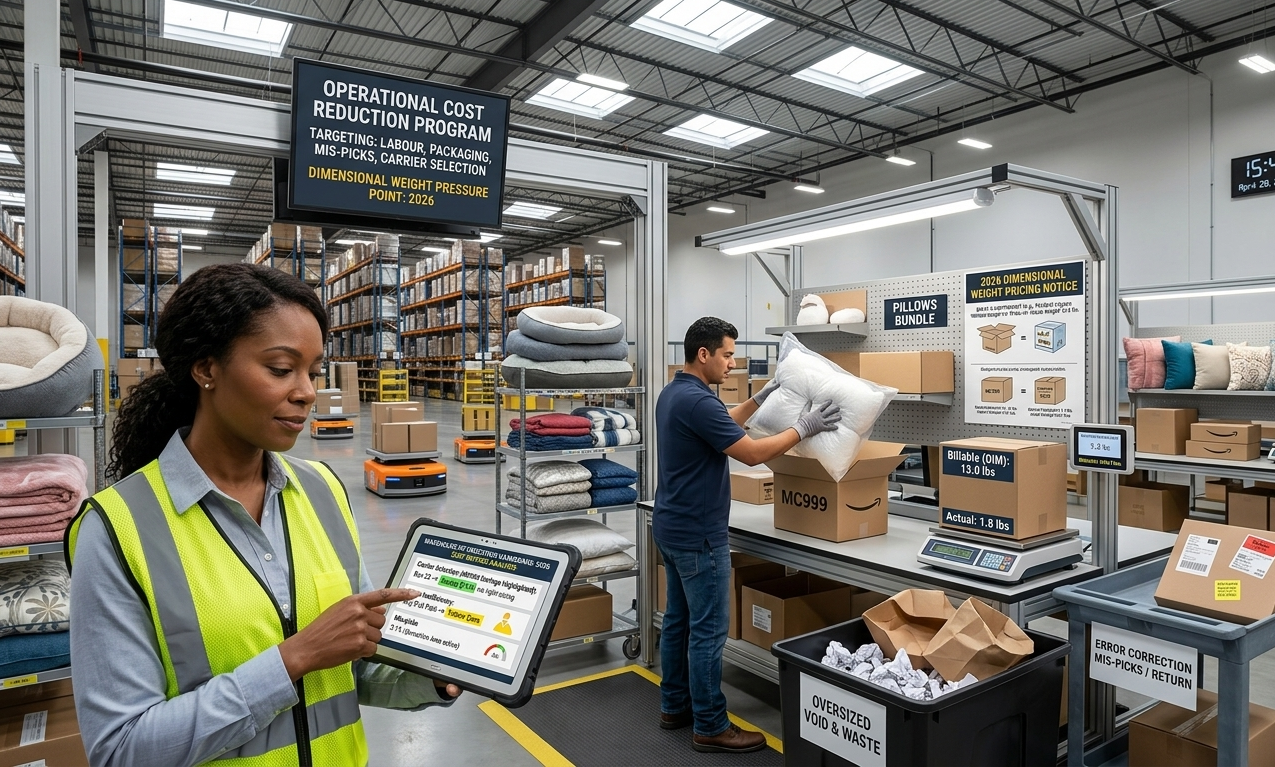
Warehouse shipping costs extend beyond carrier invoices. Major cost drivers include labour inefficiency, packaging waste, mis-picks, and suboptimal carrier selection.
A key pressure point in 2026 is dimensional weight pricing, which significantly impacts ecommerce shipments, particularly for lightweight but bulky items.
Effective cost control strategies include:
- Right-sized packaging to reduce dimensional weight charges
- Automated carton selection logic within WMS platforms
- Optimised pick paths and labour allocation
- Carrier rate optimisation and service-level matching
- Consolidation strategies such as zone-based shipping
Together, these reduce cost per order and improve margin predictability.
Reducing shrinkage and improving control
Inventory shrinkage remains a persistent issue across warehouse environments. Common causes include mis-picks, damage, theft, and administrative error.
As SKU counts expand and fulfilment speeds increase, operational control becomes more critical.
Modern warehouse shipping environments rely on:
- Barcode scanning at every movement stage
- Serialised SKU tracking
- Restricted access zones for high-value stock
- Cycle counting instead of annual stock takes
- Structured quality control checkpoints
These controls reduce loss, improve inventory accuracy, and strengthen forecasting reliability.
The End-to-End Warehouse Shipping Process
1. Receiving and inspection of inventory
The process begins at inbound receiving. Most modern warehouses operate using advance shipping notices (ASNs), allowing inbound planning before arrival.
On receipt, goods are:
- Checked against ASN data
- Verified via barcode scanning
- Inspected for damage or discrepancies
- Logged into the WMS system in real time
Accurate dock-to-stock performance ensures inventory becomes available for fulfilment quickly, reducing stock-outs and improving service levels.
2. Putaway and storage allocation
Once received, inventory is transferred to storage locations using WMS-directed putaway logic. Allocation is typically based on:
- SKU velocity
- Size and handling requirements
- Storage constraints
- Picking efficiency
Fast-moving items are placed in forward pick zones near packing stations, while slower-moving stock is stored in reserve locations. Poor layout design increases travel time, congestion, and labour cost.
3. Order picking
Order picking is typically the most labour-intensive stage of warehouse fulfilment.
Common picking methods include:
- Piece picking for individual orders
- Batch picking for grouped orders
- Zone picking by warehouse area
- Wave picking aligned to carrier schedules
Barcode verification is used throughout to reduce errors and improve accuracy. In high-volume environments, picking strategy is dynamically adjusted based on order mix and demand patterns.
4. Packing, verification, and labelling
Packing is a critical control point for both cost and accuracy.
At this stage, staff:
- Verify order contents
- Inspect items for damage
- Select appropriate packaging materials
- Apply shipping labels
Packaging optimisation is essential. Oversized cartons increase shipping costs, while insufficient protection increases returns and damage rates.
Modern systems use cartonisation logic to recommend optimal packaging based on item dimensions and weight. Labels are generated automatically with carrier-specific routing and service requirements.

5. Shipping and carrier handover
Once packed, orders are staged by carrier and service level for collection.
This stage includes:
- Order consolidation
- Manifest generation
- Carrier scheduling and cut-off alignment
- Electronic data exchange for tracking
Integration between warehouse systems and transportation management platforms enables real-time rate selection, tracking updates, and reduced administrative friction.
Failure to meet carrier cut-offs directly impacts delivery timelines.
6. Returns and reverse logistics
Returns processing is a standard component of ecommerce operations.
Returned goods are:
- Received and scanned
- Inspected for condition
- Classified as resellable, refurbishable, or unsellable
- Reintroduced to inventory or quarantined
Efficient returns handling improves recovery value and reduces working capital strain. Returns data is also increasingly used to inform packaging design, supplier performance analysis, and demand forecasting.
Types of Warehousing Models
Public warehouses
Shared facilities offering flexible, pay-as-you-go storage and fulfilment services. Common among small and mid-sized retailers.
Private warehouses
Single-company facilities offering full operational control. Typically used by large-scale retailers requiring customised workflows.
Cooperative warehouses
Shared infrastructure operated by aligned organisations to reduce cost while retaining partial control.
Bonded warehouses
Facilities for storing imported goods before customs duties are paid. Common in cross-border ecommerce operations.
Optimising Warehouse Shipping Operations in 2026
Layout and flow design
Efficient warehouse layouts separate receiving, storage, picking, packing, and dispatch zones. Poor design leads to congestion and inefficiency.
Warehouse management systems (WMS)
WMS platforms function as the operational control layer, providing:
- Real-time inventory visibility
- Task allocation and prioritisation
- Exception handling
- Integration with OMS and TMS systems
Automation
Automation is increasingly accessible beyond large enterprises. Common technologies include:
- Conveyor systems
- Autonomous mobile robots
- Pick-to-light systems
These improve throughput, consistency, and scalability.
Key performance indicators (KPIs)
Core metrics include:
- On-time, in-full (OTIF) performance
- Pick rate
- Pick accuracy
- Cost per order
- Return rate
These indicators provide direct insight into operational efficiency.
Quality control and security
Effective warehouse operations implement structured quality systems, including:
- Defined inspection thresholds
- Secure storage zones
- Audit processes
- Staff training frameworks
These measures reduce error rates and protect inventory integrity.
Carrier cost management
Shipping costs remain a major operational expense. Businesses reduce costs through:
- Negotiated carrier agreements
- Multi-carrier strategies
- Discount programmes and volume tiers
- Service-level optimisation
Outsourcing vs In-House Fulfilment
In-house fulfilment provides full control but requires significant capital investment and operational complexity.
Third-party logistics providers offer:
- Scalability
- Geographic reach
- Reduced fixed overhead
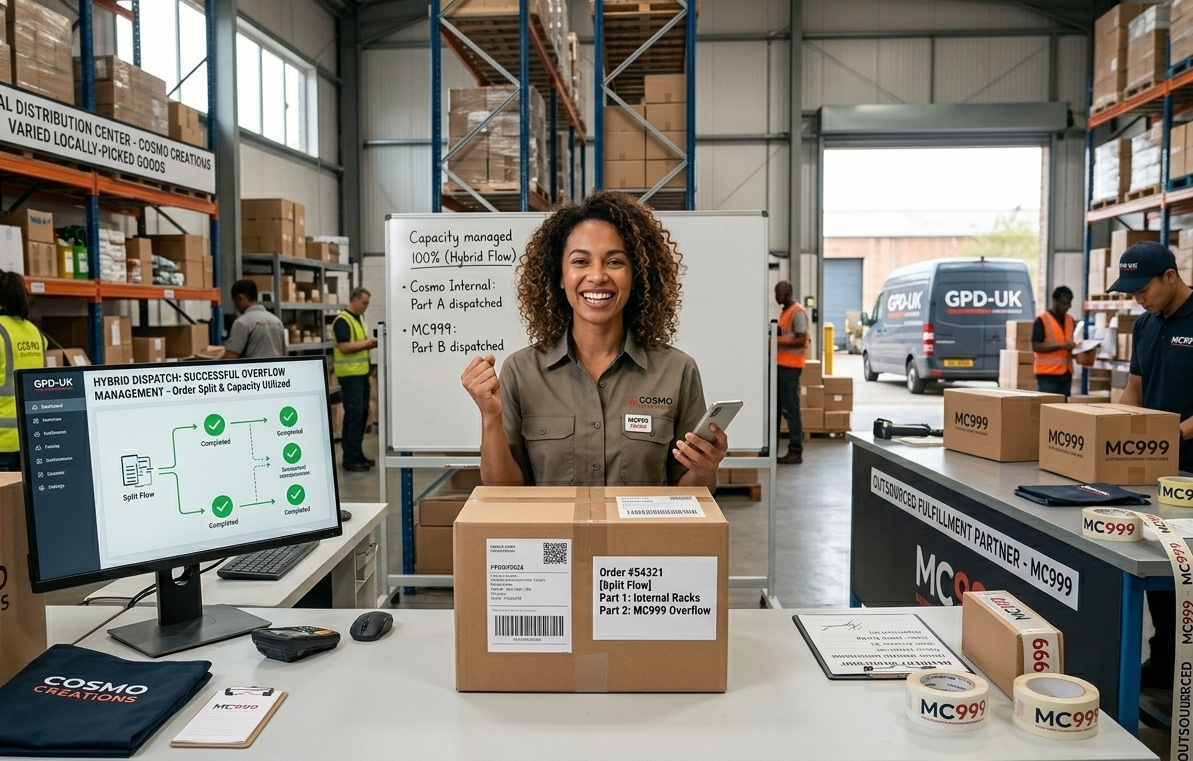
Many businesses now operate hybrid models, combining internal distribution centres with outsourced overflow capacity depending on demand patterns.
Final Thoughts
In 2026, warehouse shipping is a core determinant of retail performance. It influences cost structure, delivery capability, and customer retention.
Organisations that invest in structured processes, technology integration, and continuous optimisation convert warehouse operations into a strategic advantage rather than a cost centre.
Frequently Asked Questions
What should a warehouse shipping provider include?
Core services should cover receiving, storage, order fulfilment, packing, shipping, returns processing, and system integration.
How many warehouses are required?
This depends on order volume, customer geography, and delivery targets. Multi-warehouse networks reduce transit time but increase inventory complexity.
Why is warehouse shipping important?
It directly affects delivery speed, cost efficiency, inventory accuracy, and overall customer satisfaction.
How is a shipping warehouse set up?
Key requirements include location selection, layout planning, systems integration, staffing models, and carrier partnerships.