
Why UK Resellers Are Moving Away from Facebook Marketplace (And Where They’re Going Instead)
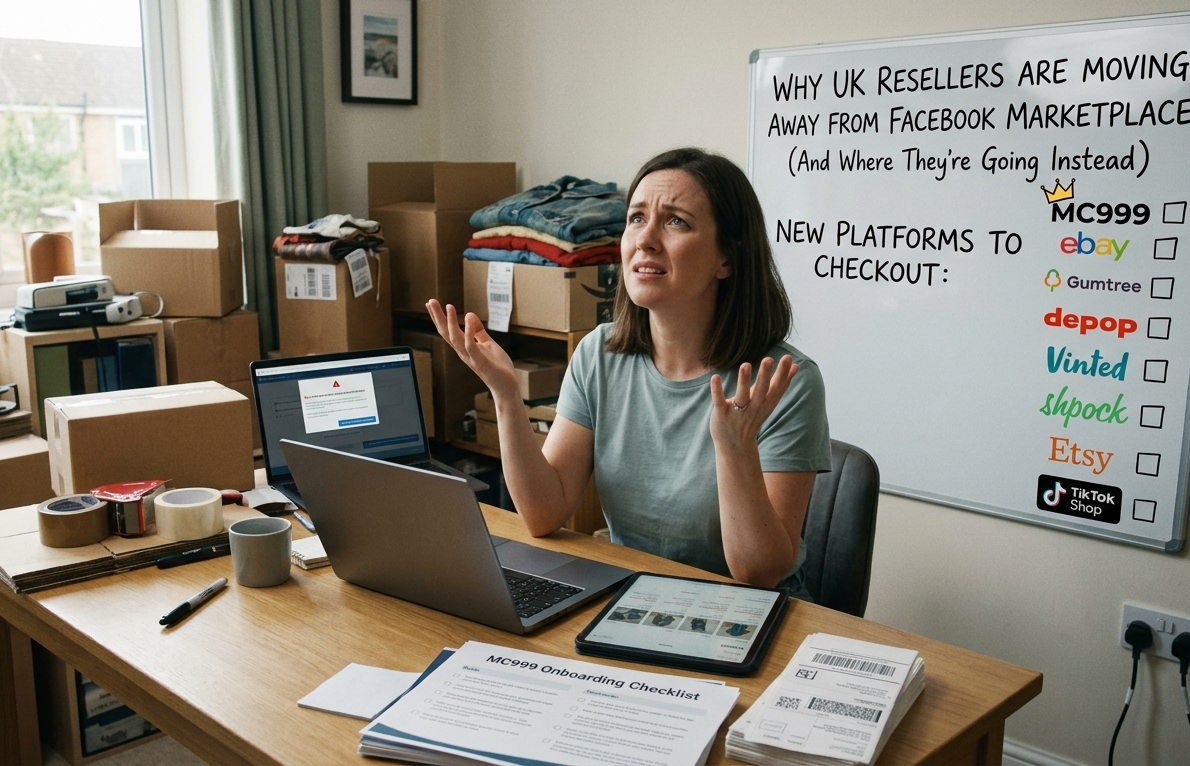
Over the past decade, the UK’s online selling landscape has evolved rapidly. Once a convenient hub for local and second-hand sales, Facebook Marketplace is now a frequent source of frustration for many resellers. Independent sellers, side-hustlers and small businesses increasingly report persistent issues—from unrealistic offers and unreliable buyers to account restrictions and scams.
If you’re a UK reseller reassessing your options, this guide outlines why sellers are stepping back from Facebook Marketplace, the key challenges they face, and the platforms gaining momentum as viable alternatives.
The Challenges Facing UK Sellers on Facebook Marketplace
1. Low Offers and Time-Wasting Enquiries
A recurring complaint among UK resellers is the volume of lowball offers. Items priced at fair market value often attract messages offering a fraction of the asking price. Combined with non-committal enquiries, this creates a time-consuming and inefficient selling process.
For instance, a seller listing vintage furniture in London may receive dozens of enquiries in a week, yet only a handful show genuine intent to purchase. The result is reduced productivity and mounting frustration.
2. Fake Buyers and Fraud Risks
Fraudulent activity remains a significant concern. Sellers frequently encounter buyers who vanish after agreeing to purchase or send falsified payment confirmations. These experiences erode trust and introduce unnecessary risk, particularly for smaller businesses.
Even experienced sellers are not immune, underscoring the limitations of platforms that lack robust verification systems and secure transaction processes.
3. Account Suspensions and Algorithmic Bans
Unexpected account bans are another major issue. Many UK sellers report being suspended—often without clear explanation—due to automated moderation systems or minor policy breaches.
The consequences are immediate: lost access to listings, interrupted communication with buyers, and halted sales. For businesses relying on consistent turnover, this unpredictability can be damaging.
4. Limited Customer Support
Customer support on Facebook Marketplace is often described as slow or inaccessible. Disputes, account issues, and buyer verification concerns can be difficult to resolve, leaving sellers without meaningful recourse.
Compared to more structured marketplaces, this lack of support contributes significantly to declining seller confidence.
Common Problems Reported by UK Resellers
Across the board, sellers highlight several recurring issues:
- Unpredictable buyer behaviour
- Unrealistic pricing expectations
- High volume of non-serious enquiries
- Exposure to scams and fraudulent payments
- Reduced visibility due to algorithmic limitations
- Minimal seller protection or dispute resolution
Collectively, these factors make selling on Facebook Marketplace increasingly inefficient and, in some cases, unsustainable.
Where UK Sellers Are Turning Instead
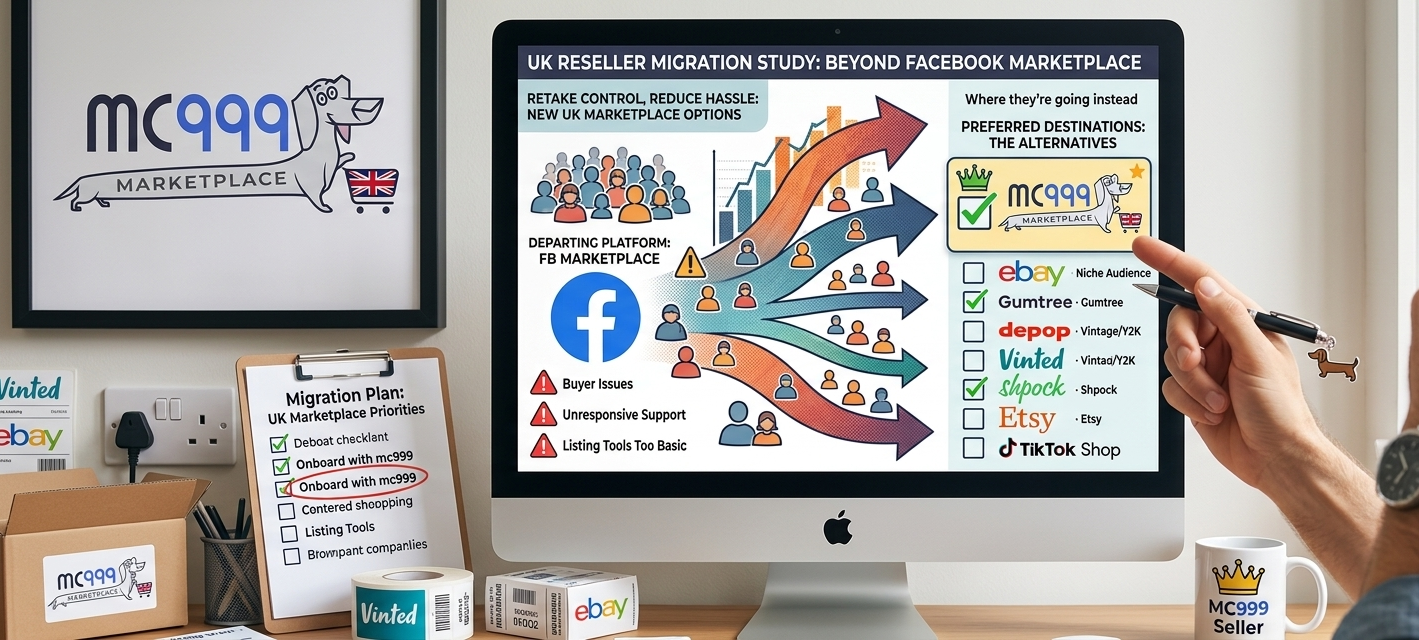
In response, many resellers are diversifying their sales channels. Platforms such as eBay, Gumtree, Depop, Vinted, Shpock, Etsy, and TikTok Shop continue to attract sellers seeking more structured environments.
Platform | Why Sellers Use It |
eBay UK | Trusted, verified buyer system, strong seller protection, and auction/sales flexibility. |
Gumtree | Popular for local selling, though still suffers from scams; used mainly for bulky items. |
Depop & Vinted | Popular for clothing and lifestyle items; community-driven with in-app payment protections. |
Shpock | Local, mobile-friendly platform for second-hand items. |
Etsy | Ideal for handmade or unique products; strong buyer trust and secure payments. |
TikTok Shop & Shopify | Growing for sellers looking to reach online audiences and operate independent shops. |
These marketplaces tend to offer stronger buyer verification, clearer policies, and more reliable support—addressing several of the shortcomings found on Facebook Marketplace.
A Shift Towards Seller-Focused Platforms
Beyond established platforms, there is growing interest in newer, community-driven marketplaces designed specifically with sellers in mind.
MC999 represents one such approach. Built around a seller-first model, it focuses on:
- Control and flexibility: Sellers manage pricing and listings without heavy algorithmic interference
- Community-driven trust: Emphasis on genuine users and transparent interactions
- Streamlined processes: Simplified buying and selling experiences
- Support for small businesses: Suitable for both part-time sellers and full-scale operations
By combining peer-to-peer functionality with structured tools, platforms like MC999 aim to reduce friction and improve reliability for UK resellers.
Final Thoughts
For many UK resellers, the drawbacks of Facebook Marketplace—low-quality enquiries, fraud risks, and inconsistent platform governance—now outweigh its benefits.
As a result, sellers are actively exploring alternatives that offer greater transparency, stability, and control. Platforms like MC999, alongside established marketplaces, reflect a broader shift towards environments that prioritise seller security and long-term growth.
For those seeking a more reliable and professional selling experience, moving beyond Facebook Marketplace is increasingly a strategic decision rather than a reactive one.
FAQ: UK Resellers and Facebook Marketplace
Why are sellers leaving Facebook Marketplace?
Due to a combination of low offers, unreliable buyers, scam risks, account bans, and limited support, many sellers find the platform inefficient and stressful.
Is Facebook Marketplace safe for sellers?
While basic safeguards exist, protection is limited. Sellers remain exposed to fraud and disputes with minimal support.
What are the best alternatives in the UK?
Popular options include eBay, Gumtree, Depop, Vinted, Shpock, Etsy, TikTok Shop, and emerging platforms such as MC999.
Why do sellers get banned?
Bans are often triggered by automated systems or policy flags, sometimes without clear justification or warning.
How can sellers reduce scam risks?
- Use secure, verified payment methods
- Avoid sharing sensitive personal information
- Be cautious of suspicious buyer behaviour
- Consider platforms with stronger protection systems